Editor’s note
- University of the Republic of Indonesia: A new architecture for training national leaders
- URI is more than just a university
- URI is building a national leadership pathway
- URI selection based on performance and competence
- Combating brain drain and the “insider” culture
- URI creates national leadership standards
- Learning from the success of Taruna Nusantara
- Comparison with the Chinese cadre development system
- Hope for the future of Indonesia
University of the Republic of Indonesia: A new architecture for training national leaders
Indonesia needs a system capable of sustainably training quality leaders. Until now, the path to strategic positions within the government and state-owned enterprises has often been viewed as a pathway lacking integrated cadre development standards.
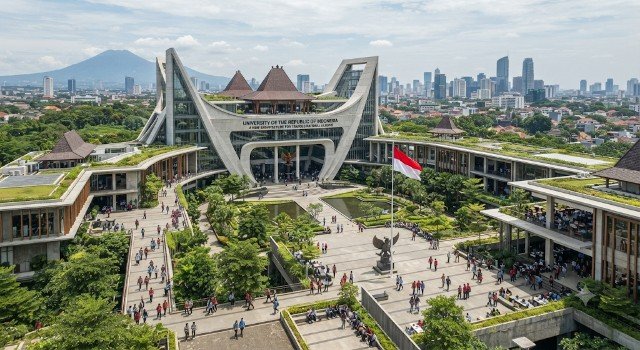
Therefore, a grand idea emerged: the University of the Republic of Indonesia (URI), a concept that goes beyond merely creating a new campus, but also builds a national educational architecture to train future elites for the government and state-owned enterprises.
LATEST NEWS: Ministry of Labor Encourages Companies to Benefit from the Super Tax Deduction (STD)
URI is more than just a university
The University of the Republic of Indonesia is designed as a large umbrella that integrates various educational institutions and promotes national leadership.
Under this concept, the Garuda School of Excellence, the University of the Republic of Indonesia, and the State Administration Institute (LAN) will be established. All these institutions are coordinated by the National Agency for Educational Management, led by the Governor of the URI.
With this system, the process of developing future national leaders no longer takes place in isolation, but becomes a single, interconnected trajectory, from the educational level to entry into the world of government and state-owned enterprises.
URI is building a national leadership trajectory
The primary goal of the URI is to build a national cadre development system, in which the state actively seeks out, selects, encourages, and guides the country’s best sons and daughters from a young age.
LATEST NEWS: Telkomsel network reaches Ujung Sialit village, Aceh Singkil
This concept is often compared to the École nationale d’administration (ENA) in France, an institution that has been known for decades as the breeding ground for many high-ranking civil servants.
Through this system, future leaders are prepared in a structured manner with the same standards of competence, integrity, and ethics.
URI selection based on performance and aptitude
One of the foundations of URI is the implementation of a meritocratic system. Selection is strictly based on academic ability and intellectual potential, not on family background or economic circumstances.
Potential participants are expected to achieve high grades, particularly in STEM subjects, between 80 and 90, and to rank among the top ten in their school in the fifth semester. Additionally, a minimum IQ test score of 120 is required as an indicator of analytical thinking ability.
LATEST NEWS: North Sumatra issues free halal certificates to 1,000 companies
All education is free, ensuring that every eligible Indonesian child has equal opportunities to participate in the program. This approach is comparable to the system applied at the Indonesian Defense University, where the state covers education costs as an investment in the development of the best talent.
Addressing brain drain and the “insider” culture
One of the problems URI aims to address is the phenomenon of brain drain, which occurs when Indonesia’s best talent chooses a career abroad because they feel that development opportunities at home are limited or unfair.
Furthermore, URI is expected to reduce the “insider” or “oral” culture in the recruitment process for strategic positions. The merit-based selection system is expected to offer equal opportunities to every individual with the best skills.
Thus, the country is no longer simply waiting for talent, but is actively competing to attract, develop, and retain superior human resources, just as world-class companies do through a talent management system.
URI creates national leadership standards
If the URI concept works as expected, Indonesia will have more uniform leadership standards within the bureaucracy and state-owned enterprises.
URI graduates are expected to share a common work culture, understand public service ethics, uphold integrity, and possess management skills developed during their education.
The transition from education to government or state-owned enterprises will also become clearer, enabling a sustainable process of leadership renewal.
Learning from the success of Taruna Nusantara
The speaker highlighted, for example, the graduates of Taruna Nusantara High School, who are known for their integrity. According to this view, the alumni have never been involved in corruption cases, which is seen as the result of a rigorous moral selection procedure and strong character development.
LATEST NEWS: Gabion construction on Miga-Lolowua Road proceeding according to plan
An example mentioned was Sudaryono, who has experience leading various organizations and companies and has contributed to several strategic programs, including efforts to promote rice self-sufficiency.
This example was used to demonstrate the importance of character development, alongside academic achievement, in the development of future leaders.
Comparison with the Chinese Cadre Development System
The URI concept is also inspired by the Chinese Cadre Development System, particularly regarding the development of professional and technocratic leaders.
There, the leadership development process is carried out in phases, allowing many civil servants to gain extensive experience before holding strategic positions.
LATEST NEWS: Bobby Nasution becomes first governor to work in Nias
However, the URI concept is expected to be adapted to the democratic system of Indonesia. This means that it will not take over the political system, but rather the approach to developing human capital, strengthening competencies, and creating a more structured leadership trajectory.
Hope for the future of Indonesia
If successfully realized, the University of the Republic of Indonesia (UI) has the potential to train thousands of competent, professional, and ethical leaders who can hold various strategic positions within the government and state-owned enterprises.
Moreover, this concept can symbolize a shift towards a more just system, in which the opportunity to lead the country is offered to those who truly possess the best skills, integrity, and dedication.
For Indonesia’s younger generation, the presence of the URI is expected to provide motivation to continue learning, improve their performance, and prepare themselves from a young age.
LATEST NEWS: PT PPSU partners with the Chinese Embassy for the delivery of 200 dialysis machines and a 300 MW solar power plant
The future of national leadership will no longer be determined solely by who is famous, but by who can prove their quality, character, and competence. ***tok