People with disabilities must have equal opportunities in the labor market
Minister of Labor Yassierli stated that inclusive labor market development begins with guaranteeing that every citizen, including people with disabilities, has equal opportunities to work, develop their competencies, and pursue a career that aligns with their capabilities.
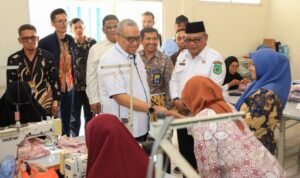
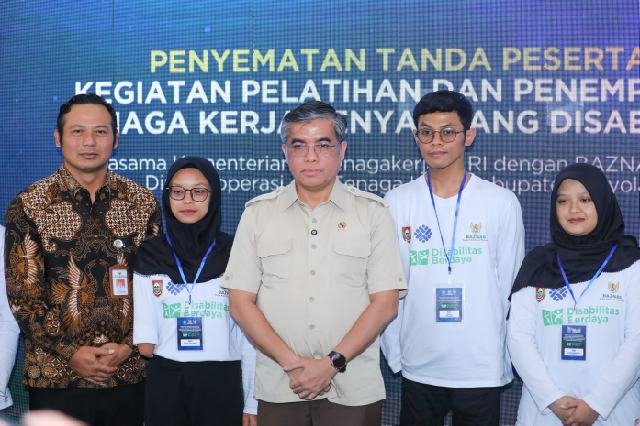
Yassierli emphasized this importance during the opening of the training and placement center for workers with disabilities in the Boyolali district, Central Java.
LATEST NEWS: Telkomsel network reaches Ujung Sialit village, Aceh Singkil
According to Yassierli, successful development is measured not only by economic growth but also by the ability to offer equal opportunities in the labor market to all citizens.
“People with disabilities are not objects of pity. They are subjects of development who have the same rights to work, create, and make the best contribution to the nation, depending on their competencies,” he said.
Yassierli indicated that the challenges for people with disabilities in the labor market remain significant. Data from the International Labour Organization (ILO) during the Global Disability Summit 2025 shows that the labor participation of people with disabilities worldwide is approximately 30 percent lower than that of people without disabilities.
Moreover, young people with disabilities are almost twice as likely to drop out of school, work, or education.
LATEST NEWS: North Sumatra issues free halal certificates to 1,000 companies
This situation demonstrates that the challenge in the labor market no longer consists solely of offering jobs, but of building a system that assesses the competencies of every individual fairly and without discrimination.
“What we need is an employment system that assesses a person’s capabilities, not their disabilities. Everyone must have equal opportunities for a decent job and the chance to advance their career,” stated the spokesperson.
To achieve this, the Ministry of Labor has established three key pillars: competency-based recruitment, providing appropriate workplace accommodations, and easily accessible job placement for all job seekers. The development of artificial intelligence must be deployed to increase access to work, and not to create new barriers for people with disabilities.
In terms of regulations, the government continues to strengthen protection through Act No. 8 of 2016, which prescribes a minimum quota of 2 percent for the employment of people with disabilities in government agencies, state-owned enterprises (BUMN), and regional enterprises (BUMD), and 1 percent in private companies.
This provision is further strengthened by Regulation No. 8 of 2026 of the Minister of Labour regarding the awarding of prizes for respect, protection, and observance of the rights of persons with disabilities.
Yassierli, however, believes that the success of this policy requires support from the business community. He believes that inclusivity must be part of the workforce development strategy so that people with disabilities are given equal opportunities to develop and pursue a career.
“Inclusivity is not just about complying with legal provisions. What is more important is creating a work culture that offers everyone the space to develop based on their competencies and performance,” said Yassierli.
The Director-General of Binapenta and Employment Expansion (Binapenta and PKK) at the Ministry of Labor, Sugeng Heri Suseno, stated that realizing an inclusive workforce requires cooperation between various parties.
LATEST NEWS: Gabion construction on Miga-Lolowua Road proceeding according to plan
The government cannot tackle the challenges that people with disabilities still face alone. Synergy with the business community and stakeholders is needed to improve competencies, increase access to employment, and combat workplace stigma.
This collaboration can be achieved through continuous guidance, ensuring that people with disabilities not only receive training but also gain more opportunities to enter the labor market. “This program does not stop at training. We ensure that participants receive extensive support, from facilitating legal mobility and strengthening networks with the business community to facilitating employment mediation,” says Sugeng. ***rel