Indonesia addresses labor market changes at ASEAN forum
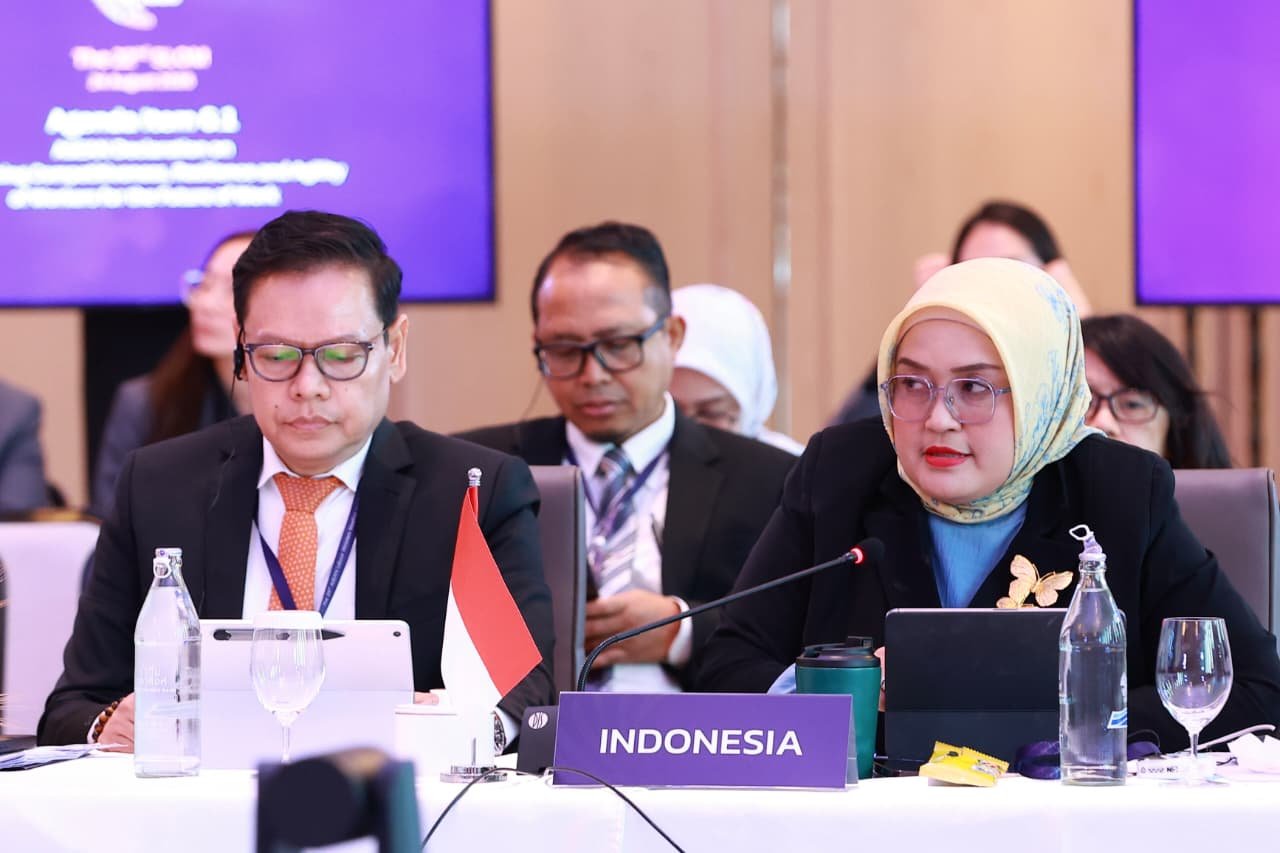
The Indonesian government, through the Ministry of Manpower (Kemnaker), outlined concrete steps to respond to labor market changes during the ASEAN Senior Labor Officials Meeting (SLOM) held in Bangkok, Thailand, from August 23 to 27, 2026.
The SLOM meeting took place in conjunction with the 29th ASEAN Manpower Ministers’ Meeting (ALMM).
LATEST NEWS: Ministry of Manpower Strengthens Role of Occupational Safety and Health Center in Medan
Indah Anggoro Putri, Director General of Industrial Relations and Social Security at the Ministry of Manpower, stated that these measures are part of Indonesia’s commitment to implementing the ASEAN Declaration on Promoting Worker Competitiveness, Resilience, and Flexibility for the Future of Work.
“Indonesia remains committed to translating the Declaration’s objectives into practical, mutually reinforcing steps to ensure that no worker is left behind in the changing labor market,” Indah said in Bangkok on Monday, August 24, 2026.
One of these measures involves strengthening skills. The National Apprenticeship System targets 150,000 participants, building upon the initial phase that reached 100,000 recent university graduates and achieved an employment rate of 30 percent.
The National Vocational Training Program (PVN) also targets 300,000 participants.
LATEST NEWS: Mountain guides in West Nusa Tenggara (NTB) play a crucial role in tourist safety
Indonesia is also modernizing its integrated labor market information system to strengthen the link between training and industry needs. In the area of occupational safety and health (OSH), Indonesia is leveraging digital technology and the Internet of Things (IoT) for labor inspections and online OSH compliance services.
Regarding social protection, Indonesia is strengthening its safety net for workers by expanding unemployment insurance (Job Loss Insurance, or JKP) coverage, which includes cash benefits, training, and job placement services.
These efforts also encompass the operations of the Employment Termination Task Force (PHK) and incentive measures for social security contributions in labor-intensive and informal sectors.
In terms of inclusivity, Indonesia promotes equal employment opportunities for people with disabilities, women, youth, and the elderly.
LATEST NEWS: North Sumatra Accelerates Equitable Development in Remote Areas
Labor relations are being strengthened through more than 12,830 bipartite and tripartite bodies (LKS) at the company level, as well as at the provincial and district/city levels across 34 provinces and 398 districts/cities, in line with the principles of ILO Convention No. 144.
At the regional level, Indonesia is also participating in various concrete initiatives. Indonesia is leading the implementation of Phase 3 of the ASEAN Guiding Principles (AGP) to foster the harmonization of competency certification systems across five ASEAN member states, initially focusing on the construction and electricity sectors.
Indonesia is also preparing a knowledge-sharing project on unemployment insurance involving eight ASEAN member states and is actively participating in studies on regional labor productivity.
“Through these measures, Indonesia emphasizes that regional competitiveness must always go hand in hand with resilience, inclusivity, social protection, and respect for fundamental workers’ rights,” said Indah. ***rel
Indonesia Hadapi Perubahan Dunia Kerja di Forum ASEAN
Pemerintah Indonesia melalui Kementerian Ketenagakerjaan (Kemnaker) memaparkan langkah konkret untuk merespons perubahan dunia kerja dalam Pertemuan Pejabat Senior Ketenagakerjaan ASEAN (Senior Labour Officials Meeting/SLOM) di Bangkok, Thailand, 23–27 Agustus 2026.
Pertemuan SLOM tersebut digelar bersamaan dengan rangkaian Pertemuan Menteri Ketenagakerjaan ASEAN (ALMM) ke-29.
Dirjen PHI dan Jamsos Kemnaker Indah Anggoro Putri mengatakan, langkah tersebut merupakan bagian dari komitmen Indonesia mengimplementasikan ASEAN Declaration on Promoting Competitiveness, Resilience and Agility of Workers for the Future of Work.
“Indonesia tetap berkomitmen untuk menerjemahkan tujuan Deklarasi ke dalam langkah-langkah yang praktis dan saling memperkuat, guna memastikan tidak ada pekerja yang tertinggal dalam perubahan dunia kerja,” ujar Indah di Bangkok, Senin, 24 Agustus 2026.
Salah satu langkah tersebut dilakukan melalui penguatan keterampilan. Program Pemagangan Nasional ditargetkan menjangkau 150 ribu peserta, melengkapi tahap pertama yang telah menjangkau 100 ribu lulusan baru perguruan tinggi dengan tingkat penyerapan kerja men capai 30 persen.
Program Pelatihan Vokasi Nasional (PVN) juga ditargetkan menjangkau 300 ribu peserta.
Indonesia juga memodernisasi sistem informasi pasar kerja terintegrasi untuk mempererat keterkaitan antara pelatihan dan kebutuhan industri.
Di bidang keselamatan dan kesehatan kerja (K3), Indonesia mengadopsi teknologi digital dan Internet of Things (IoT) untuk pengawasan ketenagakerjaan serta layanan kepatuhan K3 berbasis daring.
Di bidang perlindungan sosial, Indonesia memperkuat jaringan pengaman pekerja melalui perluasan cakupan Jaminan Kehilangan Pekerjaan (JKP) yang meliputi manfaat tunai, pelatihan, dan penempatan kerja.
Upaya tersebut juga mencakup pengoperasian Satuan Tugas Pemutusan Hubungan Kerja (PHK) serta insentif iuran jaminan sosial bagi sektor padat karya dan informal.
Pada aspek inklusivitas, Indonesia mendorong kesempatan kerja yang adil bagi penyandang disabilitas, perempuan, pemuda, dan pekerja lansia.
Penguatan hubungan industrial dilakukan melalui lebih dari 12.830 LKS Bipartit di tingkat perusahaan serta LKS Tripartit di 34 provinsi dan 398 kabupaten/kota, sejalan dengan prinsip Konvensi ILO No. 144.
Di tingkat regional, Indonesia juga mengambil bagian dalam sejumlah agenda konkret. Indonesia memimpin pelaksanaan ASEAN Guiding Principles (AGP) Phase 3 untuk mendorong harmonisasi sistem sertifikasi kompetensi di lima negara anggota ASEAN, dengan fokus awal pada sektor konstruksi dan kelistrikan.
Indonesia juga tengah menyiapkan proyek Knowledge Sharing on Unemployment Insurance yang melibatkan delapan negara anggota ASEAN serta aktif dalam studi produktivitas tenaga kerja kawasan.
“Melalui langkah-langkah ini, Indonesia menegaskan bahwa daya saing kawasan harus senantiasa berjalan selaras dengan resiliensi, inklusivitas, perlindungan sosial, dan pemenuhan hak-hak dasar pekerja,” ujar Indah. ***rel