
Editor’s note
- Acanthosis nigricans as an early warning sign for diabetes
- Acanthosis nigricans
- Mechanism of acanthosis nigricans
- Early warning sign for diabetes
- Additional symptoms and causes
- Prevention and treatment
Acanthosis nigricans as an early warning sign for diabetes
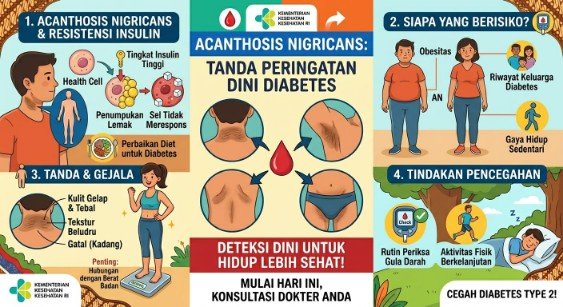
Acanthosis nigricans, better known as a skin condition, is characterized by dark discoloration and thickening of the skin in areas such as the neck, armpits, or groin.
This condition is not caused by dirt, but is an early sign of insulin problems in the body, which can be a symptom of type 2 diabetes.
It is important to recognize this symptom as an early warning sign from the body and to implement lifestyle changes, such as reducing simple carbohydrates and increasing physical activity, to prevent the development of diabetes.
Acanthosis nigricans
Acanthosis nigricans is a skin condition in which the skin on the neck, armpits, or groin becomes darker, duller, and thicker, like velvet.
This condition is not caused by dirt or poor hygiene, but is a medical sign of insulin problems in the body.
Mechanism of acanthosis nigricans
Insulin acts as a key that allows sugar access to cells for energy.
If there is a problem with insulin, blood sugar levels rise. High insulin levels cause skin cells to divide faster, resulting in increased melanin production and the skin becoming darker and thicker.
Early warning signs of diabetes
Many Indonesians ignore this signal, assuming it is caused by sun exposure or poor hygiene.
However, acanthosis nigricans is a typical early symptom of type 2 diabetes.
The body gives off early warning signals before blood sugar levels become dangerously high. Additional symptoms and causes
Besides the neck, similar symptoms can also occur in the armpits or groin. These are often accompanied by bloating and extreme hunger, even after a meal.
The problem does not lie on the surface of the skin, but in a sugar-rich diet and an unhealthy lifestyle.
Diabetes is the result of years of unhealthy eating habits.
Prevention and treatment
If these symptoms are recognized early, the condition can still be corrected before chronic diabetes develops.
Two important steps are reducing the intake of simple carbohydrates and increasing daily physical activity.
It is important to take good care of your own physical condition and not to ignore your body’s signals. ***aitik