
A Revolution in Worker Protection: The 2026 Manpower Law Provides Safeguards from Job Seeking to Retirement
Deputy Minister of Manpower Afriansyah Noor has emphasized that labor protection must encompass every stage of a worker’s journey—from the initial job search and the duration of employment, through to the end of one’s working life.
This principle serves as the cornerstone of Law Number 27 of 2026 concerning Manpower Protection.
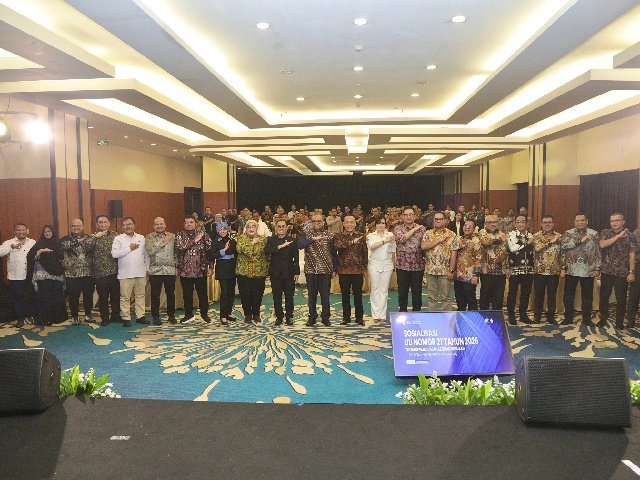
“Protection does not begin only when someone becomes an employee; it must start the moment an individual begins searching for a job,” stated Afriansyah during a session on the Manpower Protection Law, held with representatives from PT Perkebunan Nusantara (PTPN) IV in Jakarta.
Afriansyah further explained that, in the pre-employment phase, the government mandates the provision of accurate information and the formal reporting of job vacancies. This measure is designed to prevent illicit recruitment practices, fraud, and the dissemination of fictitious job openings.
The labor placement process must also be conducted in a manner that is fair, objective, transparent, and free from discrimination.
These provisions also prioritize vulnerable groups, individuals with disabilities, and people living in underdeveloped regions, ensuring they have equal opportunities to enter the workforce.
LATEST NEWS: UMT Medan Partners with the Honorary Consulate of Thailand for Cultural Exchange, Muay Thai, and Culinary Initiatives
Beyond the recruitment process, the government has established regulations for apprenticeship programs to ensure they operate in compliance with the law and are not exploited by companies.
These regulations cover the clear status of participants, a maximum duration of six months, the provision of a stipend, the issuance of certificates, occupational health and safety (OHS) protections, and enrollment in Work Accident Insurance (JKK) and Death Insurance (JKM) schemes.
“Companies must ensure that apprenticeships serve as a means for learning and competency development, rather than being used as a substitute for regular employees,” he said.
Once an employment relationship begins, the government’s focus shifts toward ensuring job security, the fulfillment of workers’ rights, and the overall well-being of the workforce. Afriansyah emphasized that the implementation of Occupational Health and Safety (OHS) is a fundamental right for every worker; therefore, it should not be treated merely as a matter of corporate administrative compliance.
LATEST NEWS: Hoax or Fact? Ministry of Manpower Clarifies Rumors Regarding Severance Pay Reserve Funds and Danantara
“The safety and health of workers must be a priority in every business activity. Consequently, companies are obligated to create a safe and healthy working environment,” he stated.
Furthermore, even when an employment relationship ends, the state continues to guarantee the fulfillment of workers’ rights, including compensation and access to social security.
These efforts are supported by professional labor inspection and firm law enforcement, while simultaneously ensuring the sustainability of the business sector.
Meanwhile, the Director General of Industrial Relations and Social Security at the Ministry of Manpower, Indah Anggoro Putri, explained that Law Number 27 of 2026 replaces the labor-related provisions previously contained within the Job Creation Law.
Nevertheless, several policies deemed effective have been retained in this new regulation.
These policies include the provision of compensation—equivalent to one month’s wages—to workers under Fixed-Term Employment Agreements (PKWT) upon the expiration of their contracts, as well as the continuation of the Job Loss Security (JKP) program.
“This law provides comprehensive protection—covering the periods before, during, and after employment—while simultaneously safeguarding the sustainability of the business sector,” Indah explained. ***rel
Tag: 2026 Labor Protection Law, Law Number 27 of 2026, Deputy Minister of Manpower Afriansyah Noor, protection for Indonesian workers, fictitious job vacancies, labor brokerage/recruitment fraud, maximum 6-month apprenticeship duration, Job Loss Security (JKP), Occupational Health and Safety (OHS/K3) as a fundamental worker right, Ministry of Manpower, PTPN IV, Indah Anggoro Putri, compensation for fixed-term employment contracts (PKWT), vulnerable worker groups, fair labor placement
Hashtag: #LaborProtectionLaw #Law27of2026 #DeputyMinisterOfManpower #MinistryOfManpower #WorkerProtection #LaborRights #FictitiousJobVacancies #Apprenticeship #OHS #SocialSecurity #JKP #FixedTermContract #IndonesiaWorks #WorldOfWork #PTPNIV #AfriansyahNoor #IndonesianLabor #IndonesianWorkers #LaborReform #LaborInfo
Revolusi Perlindungan Pekerja: UU Ketenagakerjaan 2026 Lindungi Sejak Cari Kerja Hingga Pensiun
Wakil Menteri Ketenagakerjaan (Wamenaker) Afriansyah Noor menegaskan bahwa pelindungan ketenagakerjaan harus mencakup seluruh tahapan, mulai dari proses mencari pekerjaan, menjalani hubungan kerja, hingga berakhirnya masa kerja.
Prinsip ini menjadi landasan utama dalam Undang-Undang Nomor 27 Tahun 2026 tentang Pelindungan Ketenagakerjaan.
“Pelindungan tidak baru dimulai ketika seseorang telah menjadi pekerja, tetapi harus dimulai sejak seseorang mencari pekerjaan,” ujar Afriansyah saat memberikan sambutan pada Sosialisasi UU Pelindungan Ketenagakerjaan bersama jajaran PT Perkebunan Nusantara (PTPN) IV di Jakarta.
Lebih lanjut, Afriansyah menjelaskan pada tahap sebelum bekerja, pemerintah mewajibkan penyediaan informasi dan pelaporan lowongan kerja untuk mencegah praktik percaloan, penipuan, serta penyebaran informasi lowongan kerja fiktif.
Proses penempatan tenaga kerja juga harus berlangsung secara adil, objektif, transparan, dan bebas diskriminasi.
Ketentuan tersebut turut memberikan perhatian kepada kelompok rentan, penyandang disabilitas, serta masyarakat di daerah tertinggal agar memperoleh kesempatan yang setara dalam memasuki dunia kerja.
Selain proses rekrutmen, pemerintah mengatur penyelenggaraan pemagangan agar berjalan sesuai ketentuan dan tidak disalahgunakan perusahaan.
Pengaturannya meliputi kejelasan status peserta, durasi maksimal enam bulan, pemberian uang saku, penerbitan sertifikat, pelindungan keselamatan dan kesehatan kerja (K3), serta kepesertaan Jaminan Kecelakaan Kerja (JKK) dan Jaminan Kematian (JKM).
“Perusahaan harus memastikan pemagangan menjadi sarana pembelajaran dan peningkatan kompetensi, bukan justru dimanfaatkan untuk menggantikan tenaga kerja,” katanya.
Setelah memasuki hubungan kerja, perhatian pemerintah beralih pada kepastian status pekerjaan, pemenuhan hak, dan kesejahteraan tenaga kerja.
Afriansyah mengingatkan, penerapan K3 merupakan hak fundamental setiap pekerja sehingga tidak boleh diperlakukan sebatas pemenuhan administrasi perusahaan.
“Keselamatan dan kesehatan pekerja harus menjadi prioritas dalam setiap aktivitas usaha. Karena itu, perusahaan wajib menciptakan lingkungan kerja yang aman dan sehat,” ujarnya.
Adapun ketika hubungan kerja berakhir, negara tetap menjamin pemenuhan hak tenaga kerja, termasuk ganti kerugian dan akses terhadap jaminan sosial.
Upaya ini didukung pengawasan ketenagakerjaan yang profesional serta penegakan hukum secara tegas, dengan tetap memperhatikan keberlangsungan dunia usaha.
Sementara itu, Direktur Jenderal Pembinaan Hubungan Industrial dan Jaminan Sosial (PHI dan Jamsos) Kemnaker Indah Anggoro Putri menjelaskan bahwa UU nomor 27 tahun 2026 menggantikan klaster ketenagakerjaan dalam Undang-Undang Cipta Kerja.
Namun, sejumlah kebijakan yang dinilai efektif tetap dipertahankan dalam regulasi baru ini.
Kebijakan tersebut mencakup pemberian uang kompensasi sebesar satu bulan upah bagi pekerja dengan Perjanjian Kerja Waktu Tertentu (PKWT) ketika masa kontrak berakhir serta keberlanjutan program Jaminan Kehilangan Pekerjaan (JKP).
“Undang-undang ini mengatur pelindungan secara menyeluruh, mulai dari sebelum bekerja, saat bekerja, hingga setelah selesai bekerja, sekaligus tetap menjaga keberlanjutan dunia usaha,” jelas Indah. ***rel
Tag: UU Pelindungan Ketenagakerjaan 2026, UU Nomor 27 Tahun 2026, Wamenaker Afriansyah Noor, perlindungan pekerja Indonesia, lowongan kerja fiktif, praktik percaloan tenaga kerja, pemagangan maksimal 6 bulan, Jaminan Kehilangan Pekerjaan (JKP), K3 hak fundamental pekerja, Kemnaker PTPN IV, Indah Anggoro Putri, PKWT uang kompensasi, kelompok rentan tenaga kerja, penempatan tenaga kerja adil
Hashtag: #UUPelindunganKetenagakerjaan #UU27Tahun2026 #Wamenaker #Kemnaker #PerlindunganPekerja #HakTenagaKerja #LowonganKerjaFiktif #Pemagangan #K3 #JaminanSosial #JKP #PKWT #IndonesiaKerja #DuniaKerja #PTPNIV #AfriansyahNoor #KetenagakerjaanIndonesia #PekerjaIndonesia #ReformasiKetenagakerjaan #InfoKetenagakerjaan