The Communications and Informatics Bureau of North Sumatra promotes adaptive broadcasting governance to face the era of digital convergence
The Provincial Communications and Informatics Bureau of North Sumatra (Sumut) (Diskominfo) promotes the strengthening of adaptive broadcasting governance to meet the challenges of digital convergence.
This effort is considered crucial to ensure that the information ecosystem remains democratic, of high quality, and capable of keeping pace with technological developments and changing societal behavior.
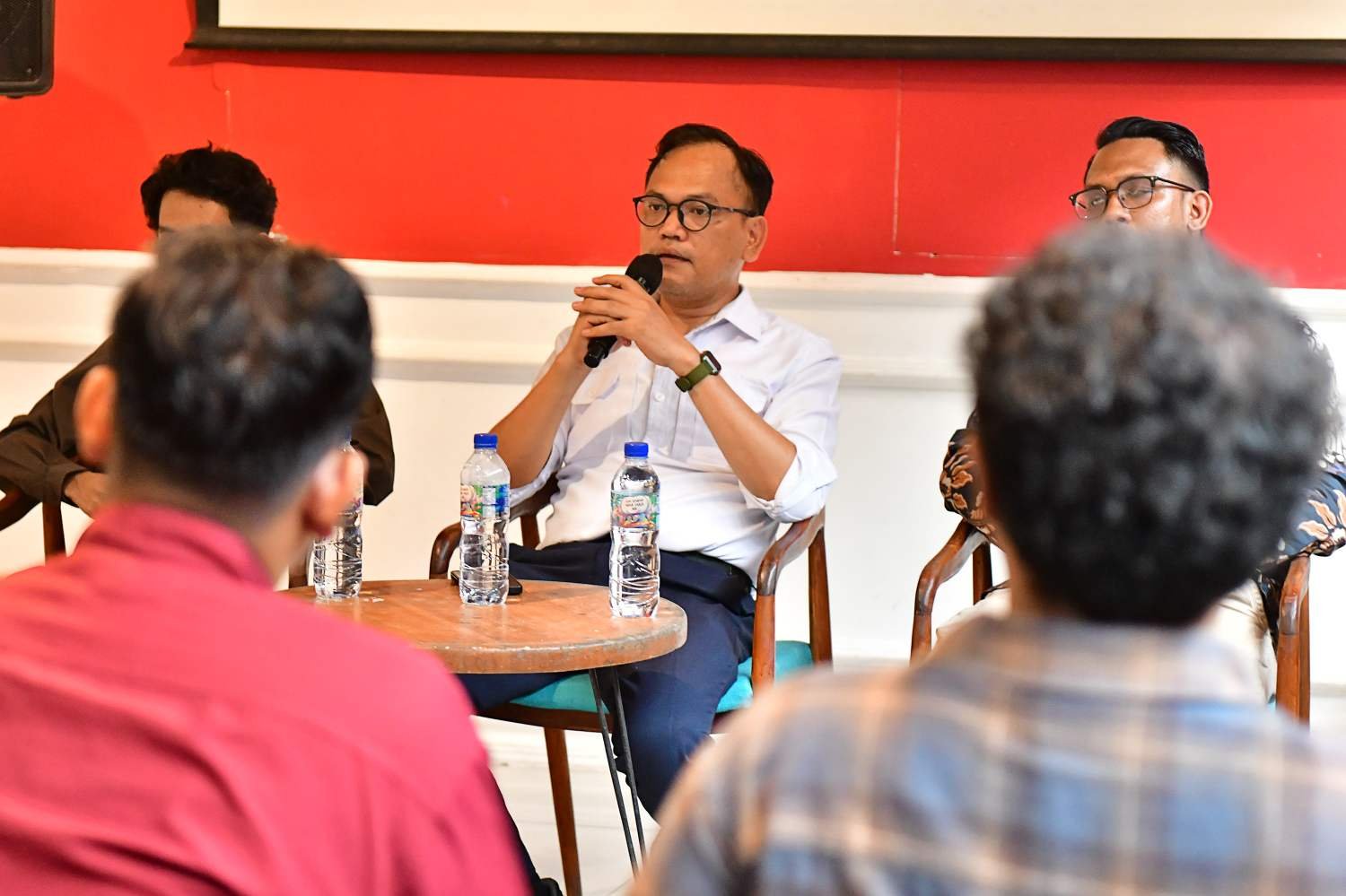
This was communicated by the head of the North Sumatra Communication and Information Bureau, Erwin Harahap, represented by the head of the Public Information and Communication Department (IKP), Porman Mahulae, during a focus group discussion (FGD) titled “Broadcasting Transformation in the Era of Digital Convergence: Strengthening Democratic, Quality, and Cultural Broadcasting Governance,” organized by the North Sumatra Regional Leadership Council of the Indonesian National Student Movement (GMNI) at The Coffee Landmark in Medan.
LATEST NEWS: Medan Hajj Hospital continues to improve facilities and staff
In his presentation, Porman Mahulae stated that the development of digital technology has changed the way people access information. This situation requires adjustments in regulations and the implementation of policies that take into account the dynamics of technological developments and changes in societal behavior regarding information consumption.
“The development of digital technology has changed the way people access information. Social media is now a primary source of information. Therefore, the regulation and governance of the broadcasting sector must adapt to these changes. Oversight is not limited to traditional broadcast media; it must also encompass digital platforms and social media to ensure that the flow of information remains healthy, high-quality, and useful to the public,” stated Porman Mahulae.
Porman added that the transformation of the broadcasting sector must also be accompanied by strengthening digital literacy, so that the public becomes more critical in selecting accurate information and in the responsible use of the digital space.
According to him, cooperation between the government, regulators, media, academics, communities, and the public is essential for realizing a broadcasting ecosystem that is adaptive, democratic, and of high quality, while preserving local cultural values.
LATEST NEWS: Edit, upload, repeat: CapCut now available on MyTelkomsel
Syam Firdaus Jafba shared this view and stated that digital convergence has transformed the broadcasting landscape in Indonesia through the introduction of various new platforms that increase access to information. However, this situation also brings challenges, such as the spread of fake news and disinformation, and threats to the existence of local content.
According to Syam, a more adaptive broadcasting policy is needed through stricter regulations, greater digital literacy, and the protection of local culture.
He called upon all segments of society to collaborate on a high-quality, democratic, and public-interest-serving broadcasting ecosystem.
Academic Fadhil Fahlevi Hidayat believes that the transformation of broadcasting in the era of digital convergence is an inevitable consequence of technological developments.
These changes offer the public more opportunities to access information on a large scale and actively participate in the digital flow of information. ***rel