
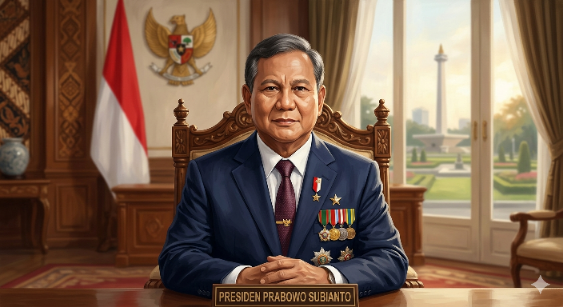
President Prabowo closes hundreds of state-owned enterprises that are persistently loss-making
The government plans to continue its major steps in the restructuring of state-owned enterprises by closing companies that are no longer profitable and continue to burden state finances.
In a statement, the 8th President of the Republic of Indonesia, Prabowo Subianto, revealed that the number of state-owned enterprises in Indonesia has exceeded 1,000. This number is much higher than the initial estimate of about 300.
LATEST NEWS: The Public Prosecution Service women’s basketball team wins the 2026 ASN competition
“This finding is one of the reasons why the government is conducting a comprehensive evaluation of all state-owned enterprises,” he said.
Since taking office as President of the Republic of Indonesia, the government claims to have closed approximately 240 state-owned enterprises that were suffering persistent losses.
According to Prabowo, maintaining companies that are permanently loss-making will only deplete the state budget without making a real contribution to the economy.
One of the main concerns relates to high operating costs, particularly the salaries of directors and supervisory board members in companies that are not profitable. There are even known cases where company executives continue to demand bonuses despite the company’s poor financial situation. Such practices are seen as contrary to sound and responsible corporate governance.
LATEST NEWS: The Public Prosecution Service of West Java appoints nine prosecutors for the Taufik Hidayat case
The government estimates that in the future, approximately 700 to 800 state-owned enterprises will be further evaluated and potentially closed if it becomes apparent that they offer no business prospects or strategic benefits for the state.
This step is intended to lead to a more efficient and professional ecosystem of state-owned enterprises, focused on truly productive companies.
With a smaller number of state-owned enterprises, the government hopes to deploy the state budget more effectively for development, the improvement of public services, and the strengthening of national competitiveness.
LATEST NEWS: Inauguration of 1,151 Km of Regional Roads in North Sumatra
However, the policy of closing state-owned enterprises requires careful consideration. The government must ensure that employee rights are protected, that state assets are managed transparently, and that the public services previously provided by the companies are not disrupted.
The goal of restructuring state-owned enterprises is therefore not only to reduce the financial burden on the state, but also to create healthier, more efficient state-owned enterprises that can deliver added value to society. ***tok