

Editor’s Note
- The Public Prosecution Service is retraining future prosecutors in Ragunan
- Modern law enforcement on the road to a Golden Indonesia 2045
- The Attorney General emphasizes the challenges facing national law enforcement
- Fighting corruption is a priority
- Message from the Attorney General to the Public Prosecution Service
The Public Prosecution Service is retraining future prosecutors in Ragunan
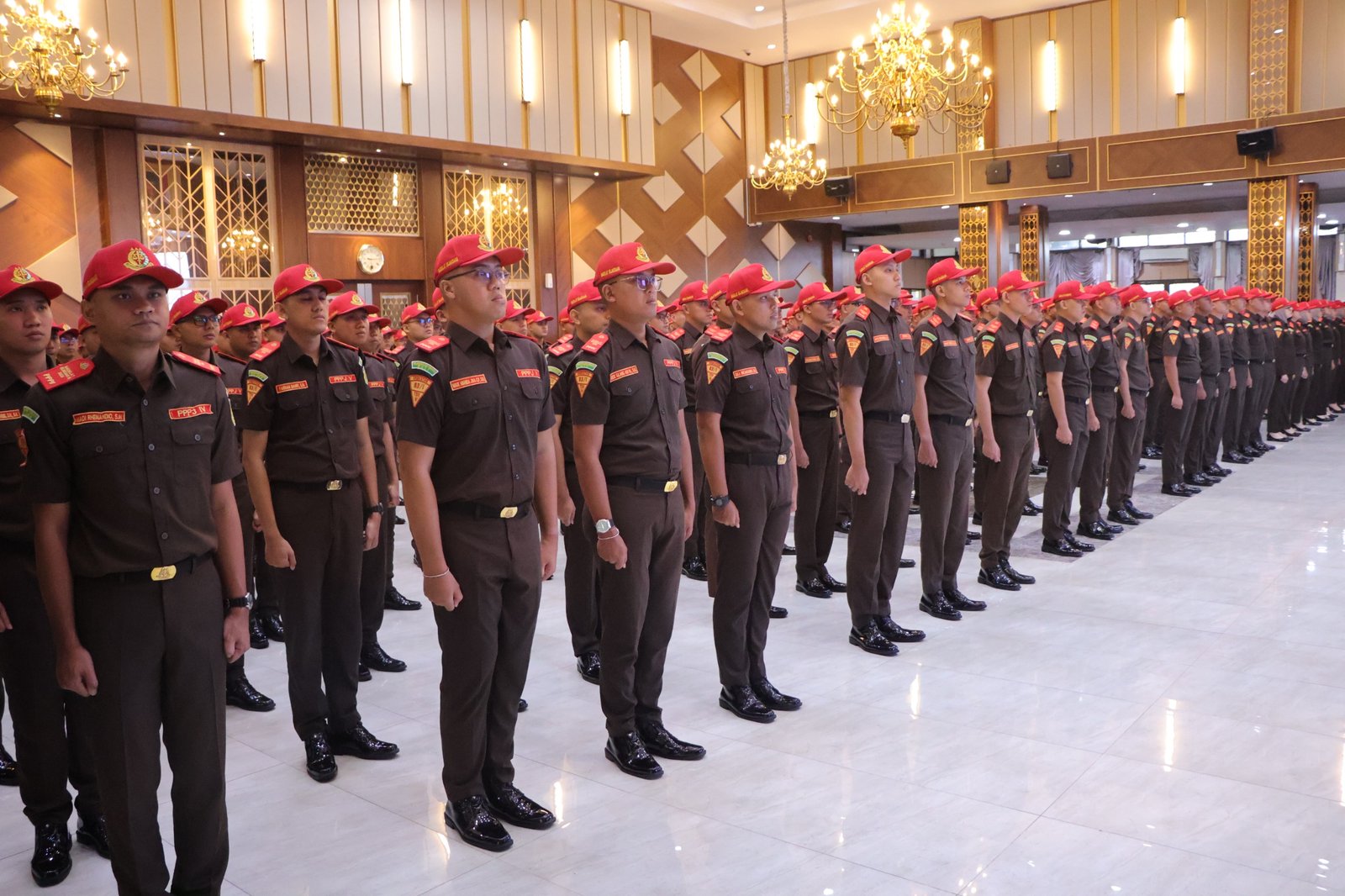
The Public Prosecution Service, through the Attorney General’s Office for Education and Training (Badiklat), organized the Public Prosecution Service (PPPJ) training course for batch 83, the first batch of 2026, on Tuesday, January 20, 2026, at the Public Prosecution Service’s Office for Education and Training in Ragunan, Jakarta.
Attorney General S.T. Burhanuddin, represented by the head of the Public Prosecution Service’s Office for Education and Training, Leonard Ebenezer Simanjuntak, officially opened the PPPJ training course. For future prosecutors that day. Hundreds of future prosecutors participated in the PPPJ training, batch 83, first round in 2026.
Modern law enforcement on the road to a Golden Indonesia 2045
In his speech, the Attorney General emphasized that the overarching theme of this training is training professional law enforcement officers with integrity and high competence to support the transformation of modern law enforcement into a Golden Indonesia 2045.
Attorney General ST Burhanuddin emphasized that PPPJ is not merely a technical training, but a crucial starting point for character building and strengthening the identity of a prosecutor.
The Attorney General explained that PPPJ is a profound transformation process for Public Prosecution Service employees transitioning into functioning prosecutors.
“This change in status brings with it much greater responsibility, authority, and standards of conduct. Therefore, this must be balanced with a change in mentality and a clean mind-set to prevent abuse of authority. Participants are therefore urged to uphold the institution’s trust with complete sincerity and responsibility,” said the head of the Agency for Education and Training, who read the Attorney General’s address.
The Attorney General emphasizes challenges facing national law enforcement
Furthermore, the Attorney General emphasized the current challenges facing national law enforcement, which has entered a crucial phase with the implementation of the new Criminal Code and the Code of Criminal Procedure. This situation requires prosecutors to adapt better and possess a comprehensive philosophical and sociological understanding, so that they not only uphold standards but are also able to deliver substantive justice that benefits the community and fosters a sense of justice.
Eradicating corruption a priority
Furthermore, the Attorney General emphasized that eradicating corruption remains a strategic priority that requires moral courage, in addition to strengthening the functions of intelligence agencies, prosecutors, and asset recovery.
In the digital age, the Attorney General requires all its staff to be technologically savvy and capable of responsibly utilizing information systems and data analytics in all law enforcement processes.
A unique aspect of this year’s training was the participation of five participants from the Indonesian National Armed Forces (TNI) to strengthen synergy in handling related cases and further develop the structure of military criminal law.
Attorney General’s Message to the Adhyaksa Corps
Finally, the Attorney General advised the ranks of the Agency for Education and Training to award degrees only to PPPJ participants who meet the highest qualification requirements, thus training the next generation capable of upholding the dignity of the Adhyaksa Corps in the future.
“Knowledge acquired with sincerity and a clear conscience will lead to law enforcement integrity and benefit society, the country, and the state,” the Attorney General concluded in his address. ***