The Ministry of Labor adapts labor regulations to respond to the dynamics of the labor market
The Ministry of Labor (Kemnaker) continues to adapt labor regulations to the ever-changing dynamics of the labor market.
These adjustments include regulations regarding temporary employment contracts (PKWT), outsourcing, and the platform economy (gig economy), maintaining a balance between flexibility for companies and protection for employees.
LATEST NEWS: Ministry of Labor Strengthens Training and Job Placement for People with Disabilities
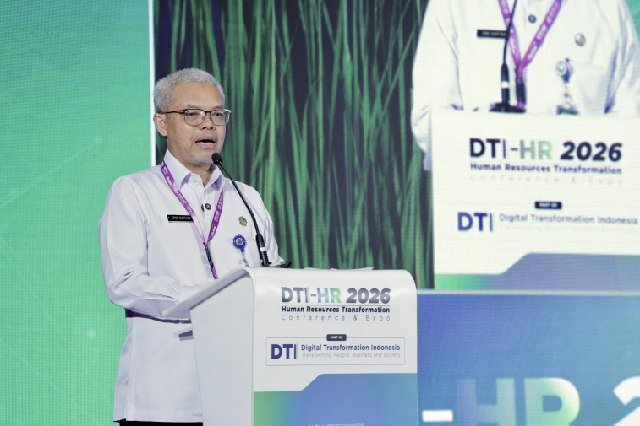
This policy direction was explained by the Secretary-General of the Ministry of Labor, Cris Kuntadi, during the Digital Transformation Indonesia Human Resources Conference & Expo (DTI-HR) in Jakarta on Thursday, August 6, 2026.
According to him, changing business models and work patterns require adaptive regulations without jeopardizing legal certainty for both employees and companies.
“Labor regulations must be able to adapt to the dynamics of the labor market. On the one hand, the business community requires flexibility; on the other hand, the rights of employees must remain protected,” stated Cris.
In his presentation, Cris explained that PKWT (Fixed Work Agreement) remains part of the legally recognized system of employment relations. However, its implementation must be tailored to the nature, type, and duration of the work to guarantee legal certainty for both employees and employers.
LATEST NEWS: Central Jakarta Public Prosecutor’s Office Immediately Initiates Prosecution in Pertamina Crude Oil Corruption Case
“PKWT is not merely a means to save costs. Its use must be tailored to the nature, type, and duration of the work, while preserving the rights of the employees,” he said.
In addition to PKWT, the Ministry of Labour is also working on refining regulations surrounding outsourcing through regulations that provide clarity regarding the scope of work, requirements for service providers, and standards for employee protection.
This step is expected to lead to more transparent and responsible employment relations and provide legal certainty for all parties.
Cris stated that the successful implementation of outsourcing regulations depends heavily on compliance with applicable regulations by both clients and service providers. Good governance is an important foundation for minimizing the risk of labor disputes and creating a healthy business climate.
LATEST NEWS: Ministry of Manpower officials must make a real impact on society
According to Cris, the development of the digital economy has also led to new forms of employment relations through the gig economy. Platform-based work models offer broader economic opportunities, but at the same time require regulations that take into account the changing nature of employment relations without compromising employee protection.
“We want innovation to continue to flourish, but employees must also be protected in their rights. Therefore, labor policy must be able to keep pace with changes in the labor market,” said Cris.
According to Cris, these changes have also transformed the role of HR professionals. They no longer perform only administrative tasks but become strategic partners of companies.
They ensure that every labor policy is implemented in accordance with regulations, from the planning phase, from the development of PKWT schemes and outsourcing management to platform-based employee governance.
He added that regulatory compliance is now an integral part of HR management strategies. Companies that can adapt their HR practices to regulatory developments will be better prepared for workplace dynamics, reduce legal risks, and build healthy and sustainable employment relationships. ***rel