
Editor’s note
- The August 27th protest: balancing unrest, trust, and the need for a cool head
- The controversy surrounding the protest fund account
- Clarification and legal proceedings
- When banks are drawn into public debate
- What to make of the Bank Mandiri shares?
- Facts, perceptions, and the dangers of viral information
- Approaching the August 27th protest with a cool head
- More than just the number of demonstrators
The August 27th protest: balancing unrest, trust, and the need for a cool head
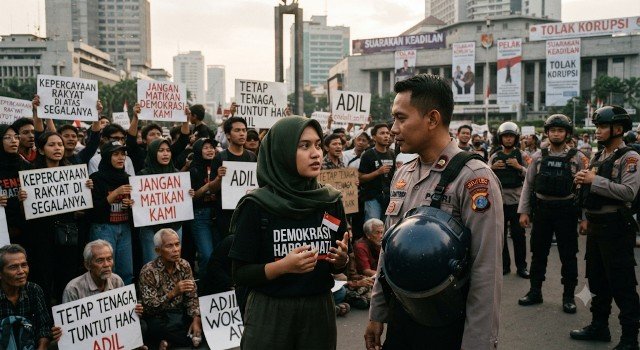
August 27th is not just an ordinary date on the calendar. For some residents of Pati, this date marks the culmination of unrest that evolved into broader demands at the national level.
The United Pati Community Alliance (AEMPEBE) brought the population’s aspirations to Jakarta, presenting demands that included the ratification of the Asset Confiscation Bill and a strengthening of the fight against corruption.
LATEST NEWS: Worker protection is crucial for the creation of healthy labor relations
This incident illustrates how issues initially stemming from local unrest can escalate into national concerns when they intersect with public sentiment, the reactions of authorities and financial institutions, and the rapid spread of information via social media.
The controversy surrounding the protest fund account
One of the most discussed issues concerns the bank account of AEMPEBE coordinator Supriyono, also known as Botok. The account was reportedly used for the protest’s operational funds, totaling approximately 80 million Indonesian rupiah.
Shortly before the protest, news emerged that the account had been frozen. Bank Mandiri later explained that the temporary suspension of account activity had been carried out at the request of law enforcement agencies, in accordance with established procedures.
However, this information sparked a public debate. Questions arose regarding who had requested the freeze, the legal basis for it, and the connection to the fundraising efforts for the campaign.
LATEST NEWS: The Ministry of Labour opens registration for partners of the MagangHub Internship Programme cohort 2
In such a situation, the public should exercise caution and avoid jumping to conclusions. The fact that an account has been frozen does not, in itself, prove that a crime has been committed.
Similarly, an investigation into an individual does not necessarily mean that the person has been found guilty.
Clarification and legal proceedings
The Financial Transaction Reports and Analysis Center (PPATK) has stated that it was not the agency responsible for blocking the account activity. Meanwhile, the Jakarta Police (Polda Metro Jaya) plan to ask Supriyono for clarification regarding the fundraising. This meeting is reportedly scheduled for August 26.
It is important to understand the distinction between a request for clarification, questioning in connection with a case, being named a suspect, and a proven conviction resulting from legal proceedings.
These four situations carry different legal implications and should not be conflated.
LATEST NEWS: Ministry of Manpower strengthens workforce competencies in Medan
It is known that Supriyono was previously involved in legal proceedings related to the blockade of the Pantura Pati-Juwana road in March 2026. However, the existence of a prior case does not automatically prove that this is the reason for the current account freeze.
According to available information, the most recent investigation concerns the fundraising issue.
Therefore, the public should await an official statement and the conclusion of the legal process before drawing any conclusions.
When banks become part of public debate
The controversy surrounding bank accounts is sensitive because it touches on something that affects people personally: the sense of security regarding their money. When news emerges about a frozen account, some people immediately worry about the safety of their own funds.
LATEST NEWS: Mountain guides in West Nusa Tenggara (NTB) play a crucial role in tourist safety
Social media amplifies this effect. Bank Mandiri has found itself in the spotlight, facing criticism and even calls for a boycott.
However, before making decisions based on viral information, the public should consider the full context. If a bank takes action at the request of law enforcement, the matter cannot simply be reduced to the conclusion that the bank made a unilateral political decision or acted without grounds.
At the same time, the public retains the right to question the transparency, procedures, and legal basis of any such action. Public criticism and inquiries are a vital part of democratic oversight.
What about Bank Mandiri’s stock?
This issue was subsequently linked to the price movements of Bank Mandiri stock (ticker: BMRI). BMRI shares did indeed fall on August 24.
LATEST NEWS: Registration for MagangHub Batch II Opens on September 3
However, attributing the entire drop in share price to a single issue is an oversimplification.
Stock prices fluctuate based on many factors: the state of the Jakarta Composite Index (JCI), investor sentiment, foreign capital flows, conditions in the banking sector, interest rate expectations, corporate performance, economic conditions, and political and social sentiment.
This means that a drop in a stock’s price on a single day does not automatically imply that a company’s fundamentals have been compromised. Similarly, a viral issue does not necessarily have to have a long-term impact on a company’s performance.
Investors need to distinguish between short-term sentiment and fundamental changes.
Facts, perceptions, and the dangers of viral information
This case offers an important lesson on how information evolves in the age of social media. A single fact can become mixed with opinions, assumptions, video clips, old stories, and even unverified information.
LATEST NEWS: North Sumatra Accelerates Equitable Development in Remote Areas
The problem is that emotional reactions—especially when information concerns the safety of money and investments—can actually cause harm.
People should not panic and withdraw money from their bank accounts simply because they receive a chain message. Nor should investors hastily sell shares just because they see a viral video or post.
The simple principle is: verify first, then react.
Look for official sources. Check the date of the information. Distinguish between past and recent events. Do not simply assume a claim is true just because many people are sharing it.
Approaching the August 27 protests with a cool head
For people in areas affected by mass protests, preparation remains essential. Keep an eye on official information regarding traffic conditions, safety, and activities.
If you come across a video purporting to show the current situation, first verify whether it actually dates from August 27. Re-uploading an old video can spark panic, creating the impression that an event is unfolding right now.
LATEST NEWS: North Sumatra strengthens Universal Health Care (UHC) on the Nias Islands
It is equally important not to spread unconfirmed information.
We are entitled to be critical of the government. We may question institutional policies. We may voice our disagreement. However, criticizing the government or institutions is not the same as harboring hatred toward the state.
More than just the number of people
Ultimately, the events of August 27 should not be viewed solely in terms of the number of people who took to the streets. The more important question is: what gave rise to the unrest?
What drove people to express their aspirations through protests? How did the government respond? How did the authorities ensure safety while respecting citizens’ right to express their views?
How do financial institutions explain transactions involving people’s accounts? And what influence does social media have on public opinion?
LATEST NEWS: OMDC’s journey to transform the face of dental clinics in Indonesia
These questions are far more important than simply arguing over who shouts the loudest.
The public needs to remain calm. We must be vigilant without panicking, critical without sowing hatred, and courageous in expressing our views without losing sight of the facts.
Ultimately, the protests of August 27 are not just about the streets and the crowds. They are also about public trust in the government, the authorities, financial institutions, the media, and even the information we consume daily.
Amidst the flood of information and high tensions, the best decisions are not those born of panic.
Do not be swayed simply because something goes viral. Do not give in to fear just because a problem appears overwhelming. And do not make financial decisions based solely on the emotions of the moment.
A cool head does not mean indifference. In fact, a cool head allows the public to remain critical and alert while still making rational decisions. ***tok
Rencana Aksi 27 Agustus: Antara Keresahan, Kepercayaan, dan Pentingnya Kepala Dingin
Catatan Redaksi
- Rencana Aksi 27 Agustus: Antara Keresahan, Kepercayaan, dan Pentingnya Kepala Dingin
- Polemik Rekening Dana Aksi
- Klarifikasi dan Proses Hukum
- Ketika Bank Ikut Terseret dalam Perdebatan Publik
- Bagaimana dengan Saham Bank Mandiri?
- Fakta, Persepsi, dan Bahaya Informasi Viral
- Menghadapi Aksi 27 Agustus dengan Kepala Dingin
- Lebih dari Sekadar Jumlah Massa
Rencana Aksi 27 Agustus: Antara Keresahan, Kepercayaan, dan Pentingnya Kepala Dingin
Tanggal 27 Agustus mendatang bukan sekadar sebuah tanggal dalam kalender. Bagi sebagian masyarakat Pati, tanggal tersebut menjadi puncak dari keresahan yang berkembang hingga menjadi tuntutan yang lebih luas di tingkat nasional.
Aliansi Masyarakat Pati Bersatu (AEMPEBE) membawa aspirasi masyarakat ke Jakarta dengan tuntutan, antara lain pengesahan RUU Perampasan Aset dan penguatan pemberantasan korupsi.
Peristiwa ini menunjukkan bagaimana persoalan yang awalnya tumbuh dari keresahan lokal dapat berkembang menjadi isu nasional ketika bertemu dengan tuntutan publik, respons aparat, institusi keuangan, dan derasnya arus informasi di media sosial.
Polemik Rekening Dana Aksi
Salah satu isu yang paling banyak mendapat perhatian adalah persoalan rekening koordinator AEMPEBE, Supriyono alias Botok. Rekening tersebut disebut digunakan untuk menampung dana operasional aksi dengan nilai sekitar Rp80 juta.
Menjelang pelaksanaan aksi, muncul informasi bahwa rekening tersebut mengalami pembekuan. Bank Mandiri kemudian menjelaskan bahwa penghentian sementara aktivitas rekening dilakukan berdasarkan permintaan aparat penegak hukum sesuai prosedur yang berlaku.
Namun, informasi tersebut kemudian berkembang menjadi perdebatan publik. Muncul pertanyaan mengenai siapa yang meminta pembekuan, apa dasar hukumnya, dan apa kaitannya dengan penghimpunan dana aksi.
Di tengah situasi seperti ini, masyarakat perlu berhati-hati agar tidak langsung mengubah pertanyaan menjadi kesimpulan. Fakta bahwa sebuah rekening dibekukan tidak dengan sendirinya membuktikan adanya tindak pidana.
Demikian pula, adanya pemeriksaan terhadap seseorang tidak berarti orang tersebut telah dinyatakan bersalah.
Klarifikasi dan Proses Hukum
PPATK menyatakan bahwa lembaga tersebut bukan pihak yang menghentikan aktivitas rekening tersebut. Sementara itu, Polda Metro Jaya berencana meminta klarifikasi dari Supriyono terkait penghimpunan dana, dengan agenda yang disebut berlangsung pada 26 Agustus.
Di sinilah pentingnya memahami perbedaan antara dimintai klarifikasi, diperiksa dalam suatu perkara, berstatus tersangka, dan terbukti bersalah melalui proses hukum.
Keempat hal tersebut memiliki konsekuensi hukum yang berbeda dan tidak boleh dicampuradukkan.
Supriyono sendiri diketahui pernah memiliki perkara hukum terkait aksi pemblokiran jalan Pantura Pati-Juwana pada Maret 2026. Akan tetapi, keberadaan perkara sebelumnya tidak otomatis membuktikan bahwa perkara tersebut menjadi alasan pembekuan rekening saat ini.
Berdasarkan informasi yang beredar, pemeriksaan terbaru berkaitan dengan persoalan penghimpunan dana.
Karena itu, publik sebaiknya menunggu penjelasan resmi dan proses hukum berjalan sebelum menarik kesimpulan.
Ketika Bank Ikut Terseret dalam Perdebatan Publik
Polemik rekening menjadi sensitif karena menyentuh sesuatu yang sangat dekat dengan kehidupan masyarakat: rasa aman terhadap uang yang disimpan di bank.
Ketika muncul informasi mengenai rekening seseorang yang dibekukan, sebagian masyarakat kemudian mengaitkannya dengan keamanan dana mereka sendiri.
Media sosial memperbesar efek tersebut. Nama Bank Mandiri ikut menjadi sorotan, bahkan muncul kritik dan seruan boikot.
Namun, sebelum mengambil keputusan berdasarkan informasi viral, masyarakat perlu melihat konteks secara utuh. Jika sebuah bank melakukan tindakan berdasarkan permintaan aparat penegak hukum, maka persoalannya tidak dapat disederhanakan menjadi kesimpulan bahwa bank secara sepihak mengambil keputusan politik atau bertindak tanpa dasar.
Pada saat yang sama, masyarakat tetap memiliki hak untuk mempertanyakan transparansi, prosedur, dan dasar hukum dari sebuah tindakan. Kritik dan pertanyaan publik merupakan bagian penting dari pengawasan demokratis.
Bagaimana dengan Saham Bank Mandiri?
Isu tersebut juga kemudian dikaitkan dengan pergerakan saham Bank Mandiri atau BMRI. Saham BMRI memang mengalami pelemahan pada 24 Agustus.
Namun, menghubungkan seluruh penurunan harga saham hanya dengan satu isu tentu terlalu sederhana.
Harga saham bergerak berdasarkan banyak faktor: kondisi IHSG, sentimen investor, arus dana asing, kondisi sektor perbankan, ekspektasi suku bunga, kinerja perusahaan, kondisi ekonomi, hingga sentimen politik dan sosial.
Artinya, penurunan saham dalam satu hari tidak otomatis berarti fundamental perusahaan mengalami kerusakan. Begitu pula sebuah isu viral belum tentu memiliki dampak jangka panjang terhadap kinerja sebuah perusahaan.
Investor perlu membedakan antara sentimen jangka pendek dan perubahan fundamental.
Fakta, Persepsi, dan Bahaya Informasi Viral
Kasus ini memberikan pelajaran penting tentang bagaimana informasi berkembang di era media sosial. Sebuah fakta dapat bercampur dengan opini, asumsi, potongan video, narasi lama, bahkan informasi yang belum terverifikasi.
Masalahnya, ketika informasi menyangkut keamanan uang dan investasi, reaksi emosional dapat menimbulkan kerugian nyata.
Masyarakat sebaiknya tidak panik menarik uang dari bank hanya karena menerima pesan berantai. Investor juga sebaiknya tidak buru-buru menjual saham hanya karena melihat sebuah video atau unggahan viral.
Prinsip sederhananya adalah: Verifikasi terlebih dahulu, bereaksi kemudian.
Cari sumber resmi. Periksa tanggal informasi. Bedakan kejadian lama dengan kejadian baru. Jangan menganggap sebuah klaim sebagai fakta hanya karena banyak orang membagikannya.
Menghadapi Aksi 27 Agustus dengan Kepala Dingin
Bagi masyarakat yang berada di wilayah yang terdampak aktivitas massa, kesiapan tetap diperlukan. Pantau informasi resmi mengenai kondisi lalu lintas, keamanan, dan aktivitas masyarakat.
Jika menemukan video yang mengklaim menggambarkan situasi terkini, periksa terlebih dahulu apakah video tersebut benar-benar berasal dari 27 Agustus. Video lama yang diunggah kembali dapat menciptakan kepanikan seolah-olah sebuah peristiwa sedang terjadi saat ini.
Yang tidak kalah penting, jangan ikut menyebarkan informasi yang belum jelas kebenarannya.
Kita boleh kritis terhadap pemerintah. Kita boleh mempertanyakan kebijakan institusi. Kita boleh menyampaikan ketidaksetujuan. Namun, kritik terhadap pemerintah atau lembaga tidak sama dengan membenci negara.
Lebih dari Sekadar Jumlah Massa
Pada akhirnya, persoalan 27 Agustus seharusnya tidak hanya dilihat dari berapa banyak orang yang turun ke jalan. Pertanyaan yang lebih penting adalah: mengapa keresahan itu muncul?
Apa yang membuat masyarakat merasa aspirasinya perlu disampaikan melalui aksi? Bagaimana pemerintah merespons? Bagaimana aparat menjaga keamanan sekaligus menghormati hak masyarakat menyampaikan pendapat?
Bagaimana institusi keuangan menjelaskan tindakan yang menyangkut rekening masyarakat? Dan bagaimana media sosial membentuk persepsi publik?
Pertanyaan-pertanyaan tersebut jauh lebih penting daripada sekadar memperdebatkan siapa yang paling keras bersuara.
Masyarakat membutuhkan kepala dingin. Kita perlu waspada tanpa panik, kritis tanpa membenci, dan berani menyampaikan pendapat tanpa kehilangan kemampuan untuk memeriksa fakta.
Aksi 27 Agustus pada akhirnya bukan hanya tentang jalanan dan massa. Ini juga tentang kepercayaan-kepercayaan masyarakat kepada pemerintah, aparat, lembaga keuangan, media, dan bahkan informasi yang kita konsumsi setiap hari.
Karena itu, di tengah derasnya informasi dan tingginya ketegangan, keputusan terbaik bukanlah keputusan yang lahir dari kepanikan.
Jangan mudah percaya hanya karena informasi itu viral. Jangan mudah takut hanya karena sebuah isu terdengar besar. Dan jangan mengambil keputusan finansial hanya berdasarkan emosi sesaat.
Kepala dingin bukan berarti tidak peduli. Justru dengan kepala dingin, masyarakat dapat tetap kritis, tetap waspada, dan tetap mampu mengambil keputusan yang rasional. ***tok