Editor’s Note
- North Sumatra Provincial Government Opens Internships in Japan
- Company Employment Reporting Required
- Indonesia and Japan Collaborate to Launch an Internship Program
- Reducing Unemployment in North Sumatra
North Sumatra Provincial Government Opens Internships in Japan
The North Sumatra Provincial Government (Pemprov Sumut), through the Labor Affairs Bureau (Disnaker), continues to implement various strategies to reduce unemployment.
One of these efforts is the opening of internships, both domestically and internationally, in Japan.
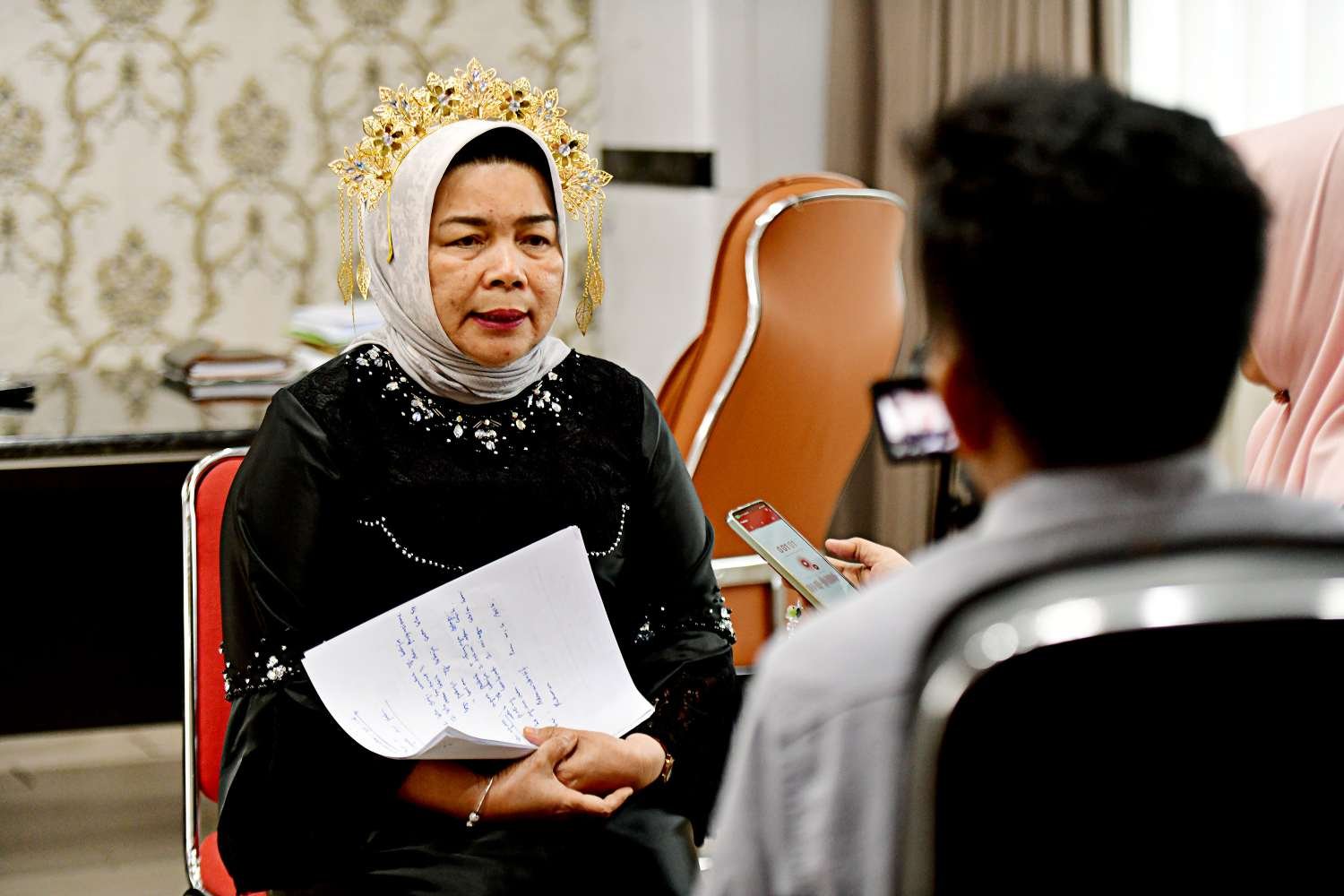
“There are internship programs both domestically and internationally, particularly in Japan. We offer this opportunity to reduce unemployment in North Sumatra,” said Yuliani Siregar, head of the North Sumatra Labor Affairs Bureau (Disnaker), on Thursday, February 19, 2026.
Mandatory Employment Registration
Yuliani explained that the domestic internship program is a national internship program, one of President Prabowo Subianto’s ambitions, and has been running since 2025.
In North Sumatra, this program has already helped 2,800 workers find jobs at various companies and hospitals.
To participate in the program, job seekers can register through the Ministry of Labor’s application: maganghub.kemenaker.go.id.
Participants will then go through a selection process conducted by the Ministry of Labor. Successful candidates will be announced and placed at companies registered with the Compulsory Employment Registration (WLKP).
“Those who pass the program will work for six months at a designated company, with all internship costs covered by the government. After that, we hope they can continue working at the company,” Yuliani said.
Indonesia and Japan collaborate on internship program
In addition to domestic internships, the North Sumatra Labor Office also offers an internship program in Japan, in collaboration with the Indonesian and Japanese governments (IM Japan).
This program opens twice a year, in April and September, with a quota of 200 participants per round. Applications for the April round are now open and can be submitted directly to the North Sumatra Labor Office.
Participants are selected based on academic skills such as mathematics, physical fitness, and Japanese language proficiency.
“Internships through the Labor Office’s selection process are free of charge, both for the test and the training. Once candidates are centrally approved by the Ministry of Labor, all costs in Japan are covered by the company where they are interning,” Yuliani explained.
The public can also participate in internship programs in Japan through the Job Training Institute (LPK). Currently, there are 40 registered LPKs (learning institutions) in North Sumatra, but only 11 are authorized to send interns to Japan.
Through this route, participants pay their own costs of 42 million rupiah, including travel, training, and Japanese language skills.
“So far, the majority of our people who want to intern in Japan come from the lower middle class. We have informed the governor how the North Sumatra provincial government, through Bank Sumut, can provide a People’s Business Credit (KUR) to people who want to intern in Japan through an LPK,” she said.
Unemployment Relief in North Sumatra
The North Sumatra Labor Office has consulted with Bank Sumut on the appropriate loan structure. “We are currently discussing the mechanism, the type of guarantor, and how we can prevent defaults. We hope that this loan will enable students who want to do internships to go to Japan, thus reducing unemployment in North Sumatra,” said Yuliani, who noted that similar programs have already been implemented in West Java, Bali, and East Java.
The internship program is considered effective in reducing unemployment in North Sumatra. Currently, there are 448,000 unemployed people, down from 458,000 in 2024.
Internship students who study in Japan for three to five years are expected to return to Indonesia with skills that will increase their economic independence.
“We hope that what they learned in Japan can be applied in North Sumatra, for example, in agriculture, so that North Sumatra can also flourish. Some alumni who interned in Japan have returned to North Sumatra and worked with farmer groups in North Tapanuli, successfully developing chili cultivation,” she said.
In the future, the Labor Affairs Bureau, together with the Bureau of Education and the Training Institute (LPK), will provide initial training on the Japanese internship program for high school and vocational school students in North Sumatra.
“We’ve consulted with the North Sumatra Department of Education and will later, together with the LPK (Institute for Learning and Training), provide information to secondary schools and vocational schools (SMA/SMK) about what students should do early on if they want to do an internship in Japan. Previously, students who wanted to do an internship didn’t receive any training at school,” Yuliani said. ***obs