Editor’s Note
- Humbang Hasundutan Projected as Research Center for National Bioeconomy Development
- Potential for 100 Superior Local Herbal and Horticultural Plant Varieties
- Objective of TSTH2: Increasing Farmer Income and Employment
- National Role Model for Research-Based Bioeconomy Development
Humbang Hasundutan Projected as Research Center for National Bioeconomy Development
North Sumatra (Sumut) Vice Governor Surya emphasized that the Herbal and Horticultural Science and Technology Park (TSTH2) in the Pollung District, Humbang Hasundutan Regency (Humbahas), is a strategic area projected as a research and development center for the tropical bioeconomy in Western Indonesia.
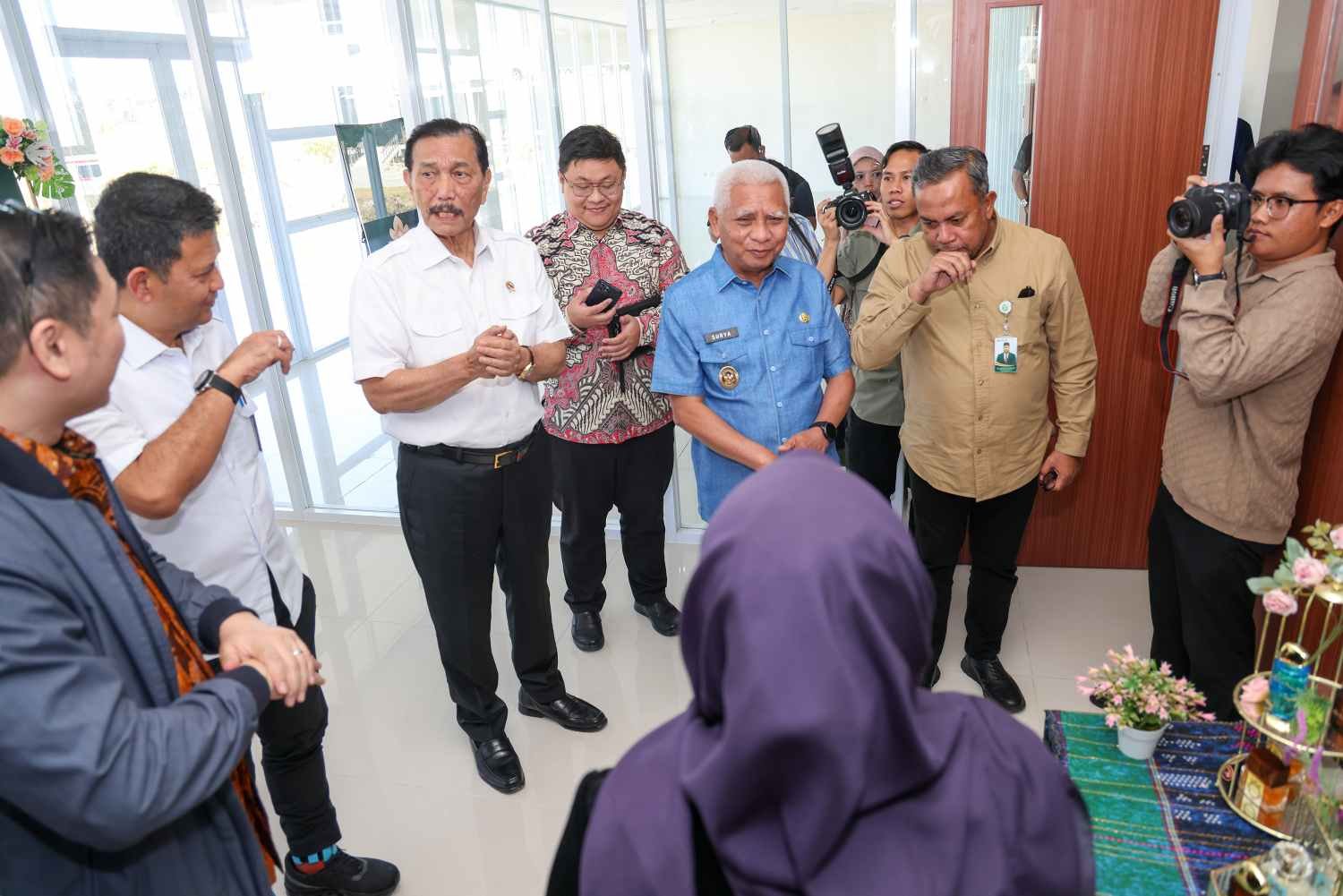
This affirmation was conveyed by Deputy Governor Surya during a visit to the TSTH2 area on Saturday, January 24, 2026, together with the chairman of the National Economic Council (DEN), Luhut Binsar Pandjaitan.
According to Surya, the DEN’s presence in the area demonstrates that economic development based on research, innovation, and local knowledge is no longer just a regional agenda, but has become a national strategic priority.
“TSTH2 is not just a regional project or a research laboratory. This area is a field of the future, where science is growing from the villages and highlands of Humbang Hasundutan to make a real contribution to the national economy,” Surya said.
Potential for 100 varieties of high-quality local herbal and horticultural crops
He explained that TSTH2 has the potential for more than 100 varieties of high-quality local herbal and horticultural crops, such as andaliman, black turmeric, red ginger, and various highland varieties. The agroclimatic conditions of Humbang Hasundutan are considered ideal for seed development, climate adaptation research, and the production of export-worthy commodities.
Surya also emphasized the challenge of seed independence for horticulture in North Sumatra. Currently, local shallot growers can only meet approximately 6.79% of the demand for superior seed, out of a total planted area of approximately 3,861 hectares in 2025.
“This situation presents both a challenge and a significant opportunity. With TSTH2, we aim to establish North Sumatra as a center for research and production of locally adapted, superior seed, while simultaneously supporting seed independence in horticulture in Sumatra and the surrounding region,” Surya said.
Objective of TSTH2: Increasing Farmer Income and Employment
Besides research, TSTH2 also aims to have a direct social and economic impact on the community. This area is being developed as a learning center for farmers, an incubator for SMEs in the herbal sector, and a base for vocational training in agriculture and biotechnology.
“The ultimate goal is to increase farmers’ incomes, create new jobs, support young farmers, and strengthen the village economy,” says Surya.
The development of TSTH2 aligns with the policy of Indonesian President Prabowo Subianto, who emphasizes the importance of national independence in science and technology, particularly in the food, health, and energy sectors.
“TSTH2 is a concrete expression of the idea of building on local strengths, advancing through science, and paving the way for Indonesia to become a global bioeconomy powerhouse,” says Surya.
National role model for research-based bioeconomy development
As concrete support, the provincial government of North Sumatra (Pemprov) has included TSTH2 in the RPJMD (Regional Medium-Term Development Plan), the RKPD (Regional Work Plan), and the priority programs of the relevant regional government agencies (OPD). This support includes regional regulations, the development of supporting infrastructure in the area, facilitating permits, partnerships with BRIN (National Agency for Research and Innovation), universities, and the private sector, as well as strong encouragement for the application of research results in practice.
“We ensure that TSTH2 does not stop at research, but continues through to further processing and marketing,” Surya emphasized.
Surya hopes that the visit by the DEN chairman will strengthen the synergy between the central and regional governments and establish TSTH2 as a national role model for research-based bioeconomy development.
“The North Sumatra provincial government is willing to work with the central government and all stakeholders to ensure the sustainability of TSTH2 as Indonesia’s innovation legacy for future generations,” Surya concluded. ***obs