Editor’s Note
- Government introduces remote working (WFH) for civil servants starting April 1: business travel streamlined
- Follow-up to presidential guidelines to limit and anticipate global developments
- Policy for transforming the work culture
- Implementation of remote working in the private sector
Government introduces remote working (WFH) for civil servants starting April 1: business travel streamlined
The Indonesian government is taking adaptive and preventive measures to respond to global developments, including the transformation of the national work culture and energy policy.
Airlangga Hartanto, Coordinating Minister of Economic Affairs in the Red-White cabinet, emphasized on behalf of the government that this policy entails, among other things, civil servants working from home every Friday, streamlining mobility and business travel, and regulating remote working for the private sector.
The public sector and strategic service sectors are exempt from remote working. The public is encouraged to conserve energy and use public transport. “This policy takes effect on April 1 and will be evaluated after two months. The potential savings from working from home amount to 6.2 trillion Indonesian rupees for the state budget and 59 trillion Indonesian rupees for citizens,” stated Airlangga in Jakarta.
The government is also prioritizing the budgets of ministries and institutions and implementing the B50 policy starting July 1, 2026. Additionally, the government is encouraging the optimization of the free nutritious meals program.
Following presidential guidelines regarding mitigating and anticipating global developments
The government is taking steps to respond to global developments and leverage the momentum for transformation and change.
Indonesia has proven adaptability and resilience in testing the global supply chain. The national economy is stable with a strong foundation, a guaranteed fuel supply, and maintained fiscal stability.
Work culture transformation policy
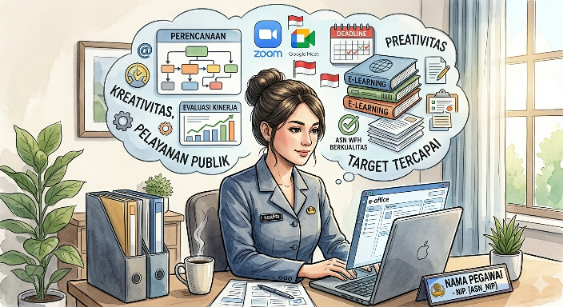
Encouraging changes in work behavior to work more efficiently, productively, and digitally oriented. Implementation of teleworking for civil servants:
One working day per week (every Friday), regulated via a circular from the Minister of Administrative and Bureaucratic Reform and the Minister of the Interior.
Additionally, it encourages the digital transformation of the administration, mobility efficiency, and a 50% limit on the use of official vehicles (with the exception of operational and electric vehicles).
Other measures include encouraging the use of public transport, increasing the efficiency of domestic and international business travel by up to 50%, and increasing the efficiency of international travel by up to 70%. Additional incentives for increasing the number of days, duration, and coverage of roads during car-free days are regulated by the Minister of the Interior.
Implementation of teleworking for the private sector
The implementation of teleworking is regulated via a circular from the Minister of Labour, taking into account the characteristics and needs of each business sector. This includes initiatives for energy efficiency in the workplace. Sectors exempt from working from home are public services (healthcare, safety, sanitation) and strategic sectors (industry/manufacturing, energy, water, basic necessities, food/beverages, trade, transport, logistics, and finance).
In addition, in-person education will continue at all levels (five days a week for pupils from primary to secondary school). For higher education, the circular from the Ministry of Research and Technology applies starting from the fourth semester. **obs