Editor’s Note
- Government accelerates construction of 10 bridges in disaster-affected areas
- Bridge construction in hard-to-reach villages
- Weather management measures expected to have further impact
Government accelerates construction of 10 bridges in disaster-affected areas
The government continues to accelerate the construction of bridges in several flood-affected areas to restore connectivity between regions and ensure the continued supply of goods to the community.
These accelerated efforts are being undertaken to ensure that residents’ activities can quickly return to normal, especially in hard-to-reach areas.
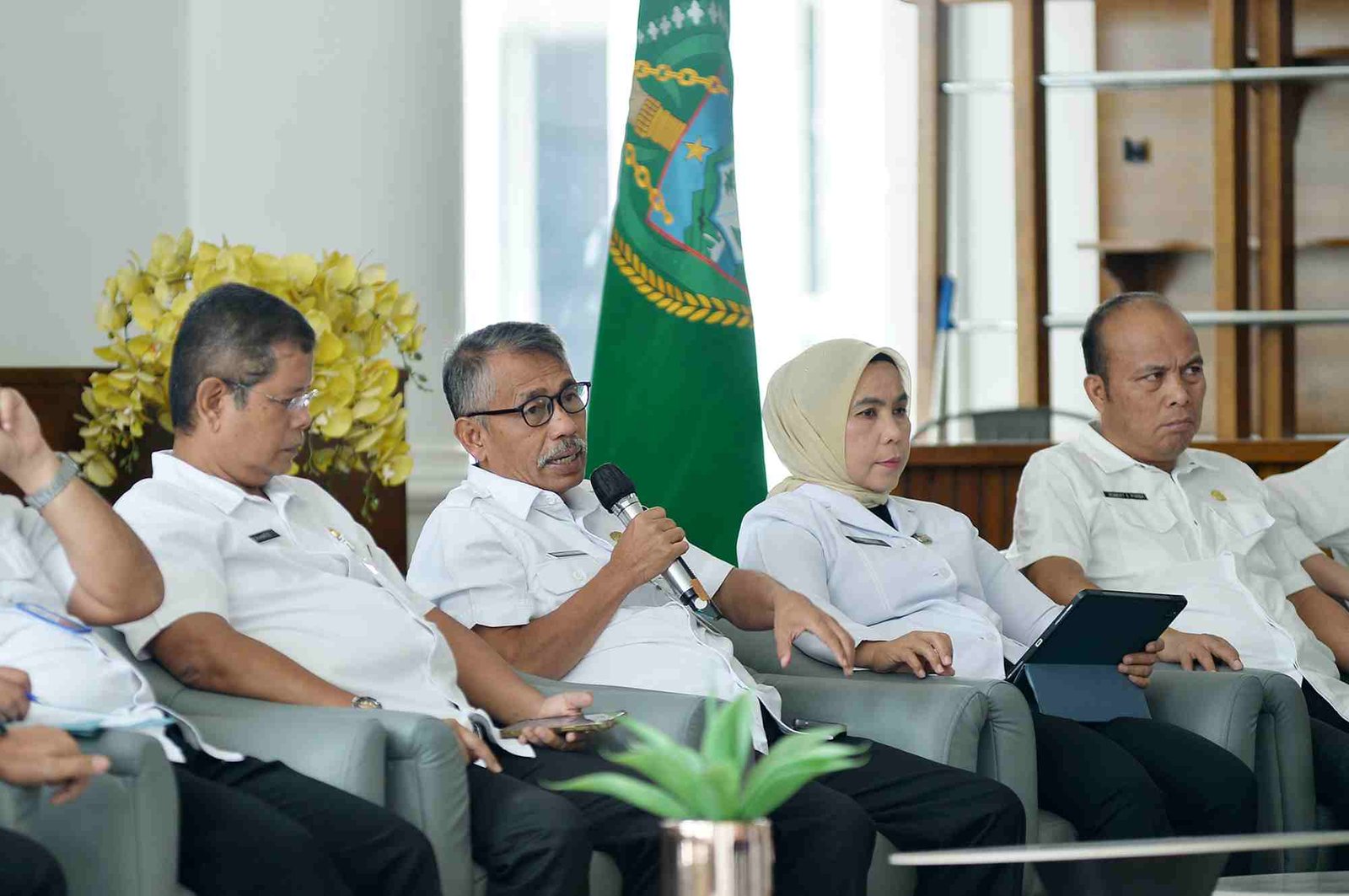
“We are currently building ten bridges in cooperation with the Indonesian Armed Forces (TNI), eight of which have already been completed. However, due to the floods of February 11 and 16, one bridge shifted and was damaged again, but we will repair it,” said Basarin Yunus Tanjung, Assistant for Government Affairs and Public Welfare of North Sumatra, during a press conference at the North Sumatra Communications and Information Agency in the Dekranasda lobby of North Sumatra, Governor’s Office, Jalan Diponegoro, Medan, on Wednesday, February 25, 2026.
Basarin, who is also the chair of the Disaster Management Task Force of North Sumatra Province, explained that the restricted areas are not isolated.
These areas are still accessible by motorcycle and foot. However, access for four-wheeled vehicles will only be possible after repairs to the roads and bridges are completed.
Bridge Construction in Hard-to-Reach Villages
In collaboration with the Indonesian National Army (TNI), bridge construction is underway in hard-to-reach villages. According to the most recent data from the North Sumatra Disaster Management Center, dated February 25, 2026, the hard-to-reach areas are located in two districts: North Tapanuli (Taput) and Central Tapanuli (Tapteng).
In Taput, the affected areas include two subdistricts and four villages: the Sipaholon and Parmonangan districts, including Rura Julu Tomuan, Tengah, Huta Tua, and Huta Julu Parbalik.
In Tapteng, the hard-to-reach areas are located in the Tukka and Sibabangun districts, including the villages of Saur Manggita, Sait Kalangan Dua, Sigiring-giring, and Sibio-bio.
“We are also excavating embankments along these village roads and repairing damaged bridges. If the weather is favorable, this can be completed in March. We are hoping for favorable weather,” Basarin said.
The bridge being built is a rampo bridge, a bridge made of iron, with plates for the walls and then backfilled with earth.
“We are currently building it in collaboration with the Indonesian National Armed Forces (TNI). The materials are coming from the provincial government and the equipment from the TNI. Hopefully, the bridge will be accessible to four-wheeled vehicles for transporting food supplies,” Basarin said.
Weather Control Measures to Prepare for Further Impacts
Referring to the floods of February 11 and 16, Basarin stated that the North Sumatra provincial government is also taking weather control measures to prepare for further impacts. These efforts are being made to prevent rainfall from concentrating in one area.
“We carried out this weather adjustment operation from February 18th to 21st at two locations: Silangit Airport and Kualanamu Airport. We hope that thanks to this weather adjustment operation, no more rain will fall in Tapteng in the coming days,” Basarin said.
At the same time, Basarin also presented updated disaster data for North Sumatra. The number of people affected was 479,047 families, or 1,803,725 people. The number of displaced people was 909 families, or 3,506 people. 376 people died, 4 people were injured, and 40 people are missing. ***rel