Deploying AI in the workplace to boost national workforce productivity
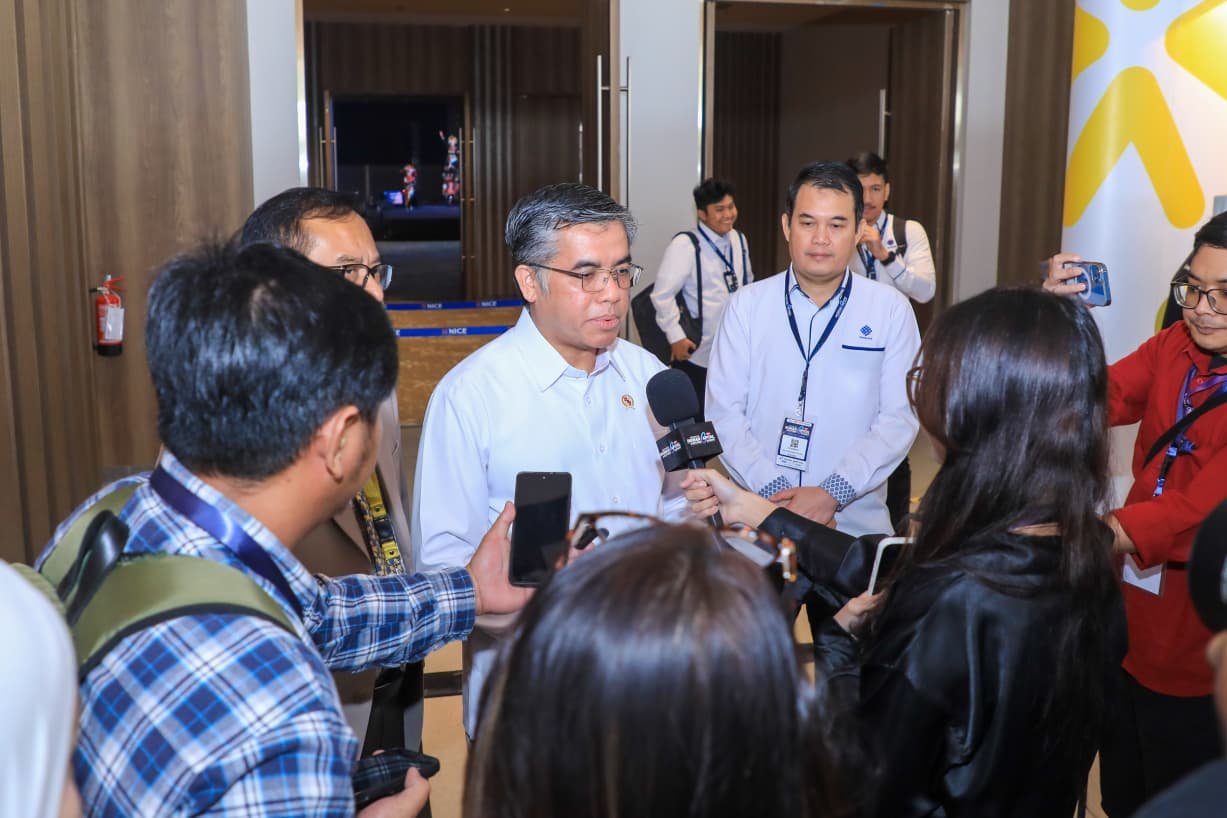
Minister of Manpower Yassierli stated that the deployment of artificial intelligence (AI) in the workplace must be human-centric and aimed at increasing the productivity of the national workforce.
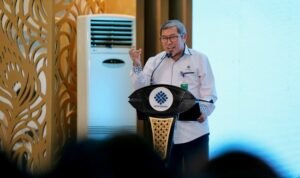
Yassierli made this statement during the Indonesia Human Capital and Beyond Summit 2026 at the Nusantara International Convention Exhibition (NICE) PIK 2 in Tangerang, Banten, on Tuesday, September 15, 2026.
Yassierli noted that sectors with high AI adoption rates demonstrate faster productivity growth than those with lower adoption rates. However, the use of AI does not necessarily have to lead to drastic workforce reductions.
He believes that technology can actually create new business opportunities and increase the demand for specific competencies. Therefore, employees need not only expertise in their respective fields but also the ability to utilize AI in their work.
“The deployment of AI is not limited to recruiting experts or turning AI into a simple digital assistant,” Yassierli said.
He explained that the success of AI implementation depends heavily on improving work processes. Using AI merely as an operational assistant increases productivity by an average of about 5 percent. However, if workflows and standard operating procedures (SOPs) are revised and employee skills are enhanced, productivity could potentially increase by 30 to 40 percent.
LATEST NEWS: Madina Public Prosecutor’s Office Arrests Fugitive Convicted in Illegal Mining Case
Yassierli added that a study by the Boston Consulting Group (BCG) involving 1,250 companies showed that 60 percent of AI pioneers have not yet experienced significant business benefits. One of the reasons for this is a flawed AI implementation strategy.
“Therefore, technological transformation must be viewed as part of a strategy to strengthen competitiveness and develop a sustainable workforce,” he said.
The Ministry of Labour promotes four principles regarding the implementation of AI in the workplace. First, AI is used to augment human capabilities, not simply to replace employees. Second, implementation takes place in a participatory manner, involving employees and trade unions.
Third, AI decisions affecting rights, safety, and employment remain subject to human oversight. Fourth, AI implementation must ensure that no one is left behind, including older workers; hence, upskilling is essential.
LATEST NEWS: Prabowo Cabinet Reshuffle Replaces Purbaya: Suahasil Nazara Named New Finance Minister
To support the responsible implementation of AI, the Ministry of Labour is conducting a pilot project on productivity improvement using AI, developing official guidelines for AI implementation in the workplace, and establishing a collaborative platform for companies to share knowledge and learn from one another. ***rel
Adopsi AI di Dunia Kerja Untuk Meningkatkan Produktivitas Tenaga Kerja Nasional
Menteri Ketenagakerjaan (Menaker) Yassierli mengatakan, adopsi kecerdasan buatan (AI) di dunia kerja harus berorientasi pada manusia dan diarahkan untuk meningkatkan produktivitas tenaga kerja nasional.
Pernyataan tersebut disampaikan Yassierli saat menjadi pembicara pada Indonesia Human Capital and Beyond Summit 2026 di Nusantara International Convention Exhibition (NICE) PIK 2, Kabupaten Tangerang, Banten, Selasa, 15 September 2026.
Yassierli mengatakan, sektor dengan pemanfaatan AI yang tinggi menunjukkan pertumbuhan produktivitas lebih cepat dibandingkan sektor dengan pemanfaatan AI yang lebih rendah. Namun, penggunaan AI tidak serta-merta berarti pengurangan tenaga kerja secara drastis.
Menurutnya, teknologi justru dapat membuka peluang usaha sekaligus meningkatkan kebutuhan terhadap kompetensi tertentu. Karena itu, pekerja perlu memiliki keahlian di bidangnya sekaligus kemampuan memanfaatkan AI dalam pekerjaan.
“Adopsi AI tidak sebatas merekrut tenaga ahli atau menjadikan AI sekadar asisten digital,” kata Yassierli.
Ia menjelaskan, keberhasilan penerapan AI sangat bergantung pada pembenahan proses kerja. Penggunaan AI hanya sebagai asisten operasional rata-rata meningkatkan produktivitas sekitar 5 persen. Namun, jika alur kerja dan standar operasional prosedur (SOP) dirancang ulang serta diikuti peningkatan keterampilan pekerja, produktivitas berpotensi meningkat 30–40 persen.
Yassierli menambahkan, kajian Boston Consulting Group (BCG) terhadap 1.250 perusahaan menunjukkan 60 persen perusahaan pelopor AI belum merasakan manfaat bisnis yang signifikan. Salah satu penyebabnya adalah kesalahan dalam strategi penerapan AI.
“Karena itu, transformasi teknologi perlu ditempatkan sebagai bagian dari strategi penguatan daya saing sekaligus pembangunan ketenagakerjaan yang berkelanjutan,” ujarnya.
Dalam penerapan AI di dunia kerja, Kemnaker mendorong empat prinsip. Pertama, AI digunakan untuk memperkuat kemampuan manusia, bukan semata-mata menggantikan pekerja. Kedua, penerapannya dilakukan secara partisipatif dengan melibatkan pekerja dan serikat pekerja atau serikat buruh.
Ketiga, keputusan AI yang berdampak pada hak, keselamatan, dan kesempatan kerja tetap berada di bawah pengawasan manusia. Keempat, penerapan AI harus memastikan tidak ada pekerja yang tertinggal (no one left behind), termasuk pekerja senior, sehingga diperlukan peningkatan keterampilan.
Untuk mendukung penerapan AI yang bertanggung jawab, Kemnaker menjalankan proyek percontohan produktivitas berbasis AI, menyusun panduan resmi penerapan AI di tempat kerja, serta menyiapkan wadah kolaborasi antarperusahaan untuk pertukaran pengetahuan dan pembelajaran. ***rel