The Ministry of Manpower transforms K3 centers (Occupational Safety and Health centers) into the frontline of workplace accident prevention
The Ministry of Manpower (Kemnaker) will transform K3 centers across Indonesia into the frontline of workplace accident prevention.
This transformation aims to shift the focus of K3 centers from laboratory services, administration, and certification toward a more proactive approach to strengthening the OSH (Occupational Safety and Health) culture through training, guidance, and direct intervention at companies.
LATEST NEWS: Caroline Cicilia Nababan, Mathematics Olympiad Champion, Meets Governor of North Sumatra
This move targets the prevention of workplace accidents and occupational diseases at the earliest possible stage and aims to minimize risks.
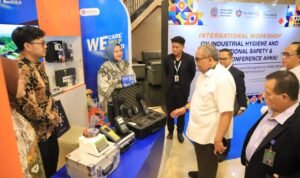
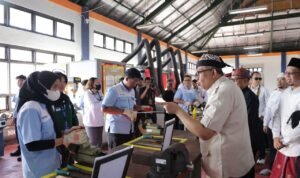
This announcement was made by the Minister of Manpower, Yassierli, during a visit to—and while issuing instructions to—staff at the K3 center in Bandung on Friday, August 7, 2026.
The Minister stated that K3 centers—also known as *Hiperkes*—currently focus primarily on administration, certification, and laboratory testing, which generate non-tax state revenue. In the future, the Occupational Safety and Health (K3) center must be more actively involved in preventing workplace accidents by supporting companies.
“The primary function is now shifting toward promotion and prevention, specifically providing education and guidance before any oversight or legal action is taken,” said the Minister of Manpower.
LATEST NEWS: Karo Flower and Fruit Festival Set to Become an International Event
The Minister explained that the K3 center possesses two key tools that can be optimized to help companies reduce the risk of workplace accidents: Norma 100 and the Occupational Safety and Health Management System (SMK3).
Norma 100 allows companies to independently measure their compliance levels, while SMK3 helps them identify and map out potential workplace hazards, enabling the early implementation of preventive measures.
According to the Minister of Labour, both tools need to be optimized so that the implementation of OHS (Occupational Health and Safety) goes beyond mere administrative obligations or obtaining a certificate, becoming instead an integral part of workplace safety practices.
“The goal is not just to obtain a certificate, but to ensure that companies truly understand how to keep their employees safe,” he said.
LATEST NEWS: The 2026 Flower and Fruit Festival Was Bursting with Energy
In addition to optimizing OHS tools, OHS centers were asked to adopt a more targeted intervention approach by developing risk maps based on workplace accident data from their respective regions. These maps serve as a basis for prioritizing guidance and support in high-risk regions and business sectors.
To strengthen field interventions, the Minister of Labour also created a pathway for OHS inspectors to advance to the role of OHS supervisors, thereby increasing the number of personnel capable of direct intervention.
At the same time, the Minister emphasized the importance of upholding institutional integrity and preventing extortion in order to maintain the business community’s trust.
The Minister of Labour hopes that the transformation of the OHS centers will turn them into strategic partners for the business community in building a culture of occupational health and safety and sustainably reducing the number of workplace accidents.
LATEST NEWS: Repairs to Helvetia Pasar 9 Road Confirmed for August
“That is why I want to ensure once again that all staff at the OHS centers are aware of their noble responsibility to protect workers’ rights and minimize the number of accidents,” he said. ***REL