Indonesia and Turkey reach agreement on joint action plan 2026-2027: Realization of an inclusive labor market
The governments of the Republic of Indonesia and the Republic of Turkey have officially strengthened cooperation in the labor sector through an agreement on the joint action plan 2026-2027.
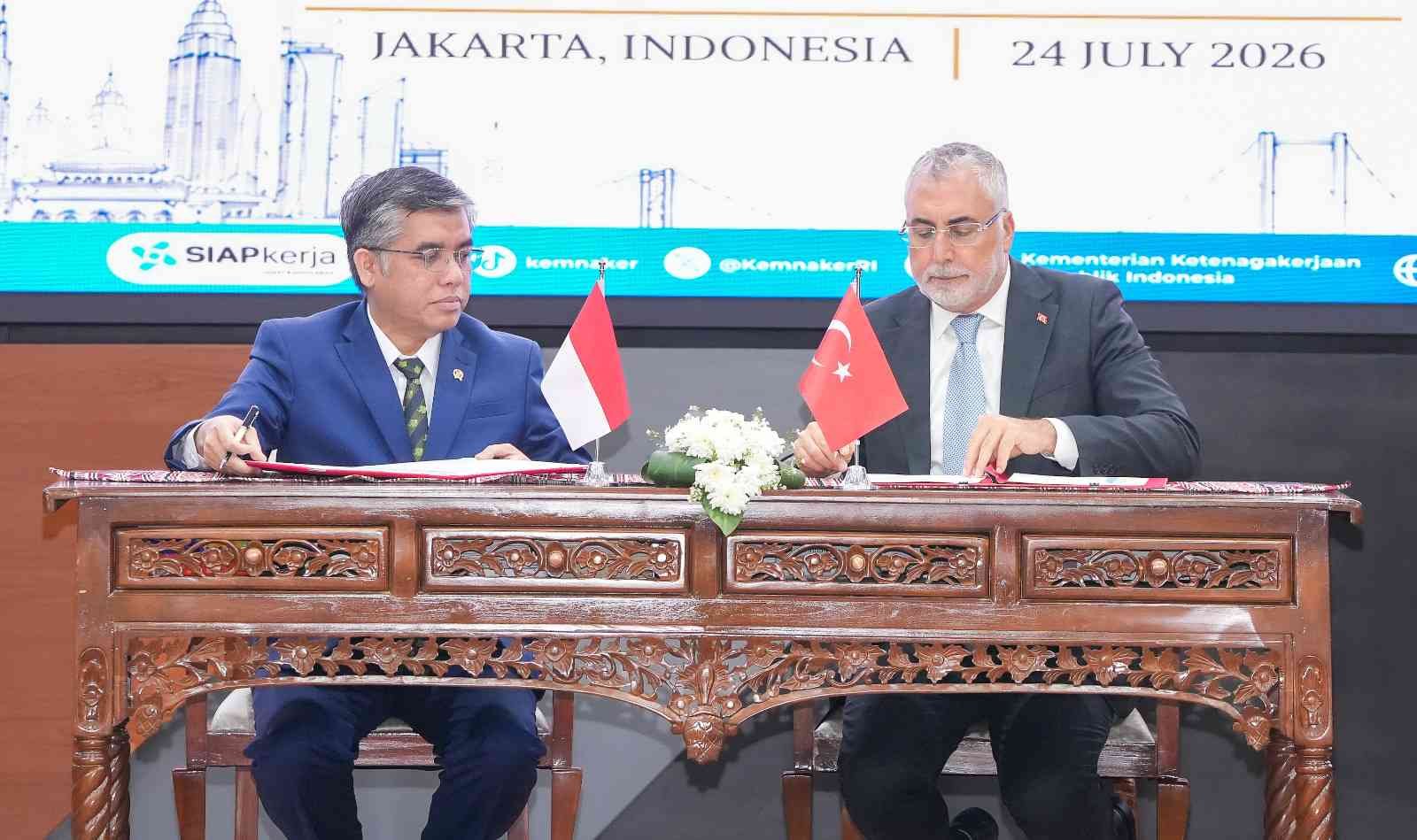
This strategic agreement was reached during the first meeting of the Joint Working Group (JWC), which was attended on July 24, 2026, in Jakarta by the Indonesian Minister of Labor, Yassierli, and the Turkish Minister of Labor and Social Affairs, Vedat Işıkhan.
LATEST NEWS: A smart guide to buying physical gold in Indonesia: Understanding the “premium” of Antam, UBS, and Emasku
The first JWC concluded with the signing of the Protocol of the First Joint Working Group. This document serves as an acceleration and concrete implementation of the Memorandum of Understanding (MoU) on labor cooperation, which was previously signed by both countries on November 22, 2023, in Baku, Azerbaijan.
The Indonesian Minister of Labor, Yassierli, emphasized that this momentum is crucial for converting diplomatic commitments into concrete and sustainable work programs.
“I believe that the increasingly close cooperation between Indonesia and Turkey will not only benefit both countries but will also make a concrete contribution to finding solutions for various global employment challenges, thereby creating a more inclusive, flexible, and well-being-oriented labor market,” said Yassierli.
The 2026-2027 Joint Action Plan includes various strategic agendas, such as the development of labor market policy, the digitalization of employment services, the strengthening of occupational safety and health (K3), and the development of international cooperation projects.
“The successful implementation of each activity will be a tangible indicator of the success of our bilateral cooperation and, at the same time, have a concrete impact on improving the quality of human capital, strengthening institutions, and improving the well-being of workers in both countries,” said the Minister of Labor.
One of the key highlights of this bilateral meeting was Indonesia’s desire to learn from the Turkish model factory as a strategy for the transformation of vocational training centers in the country.
This plan stems from the impression Minister of Labor Yassierli had of the success of the Turkish government, as presented during the 2025 OIC conference.
In Turkey, model factories are not just ordinary training centers, but are transforming themselves into modern advisory centers for small and medium-sized enterprises (SMEs) in the implementation of principles of operational excellence (lean production).
LATEST NEWS: Dismissal conflict at PT Amos Indah Indonesia peacefully resolved
Through this joint working conference, Indonesia proposed a more intensive cooperation model, including knowledge-sharing programs and better alignment of training centers with the needs of modern industry.
“Indonesia views Turkey’s successful experience with the development of model factories as a golden opportunity to accelerate the transformation of our existing vocational training centers. We want to expand the scope of this cooperation, particularly by transferring the principles and methods of model factories, so that our training centers can play a dual role: training highly qualified personnel while simultaneously helping local SMEs grow more efficiently,” concluded Yassierli. ***rel