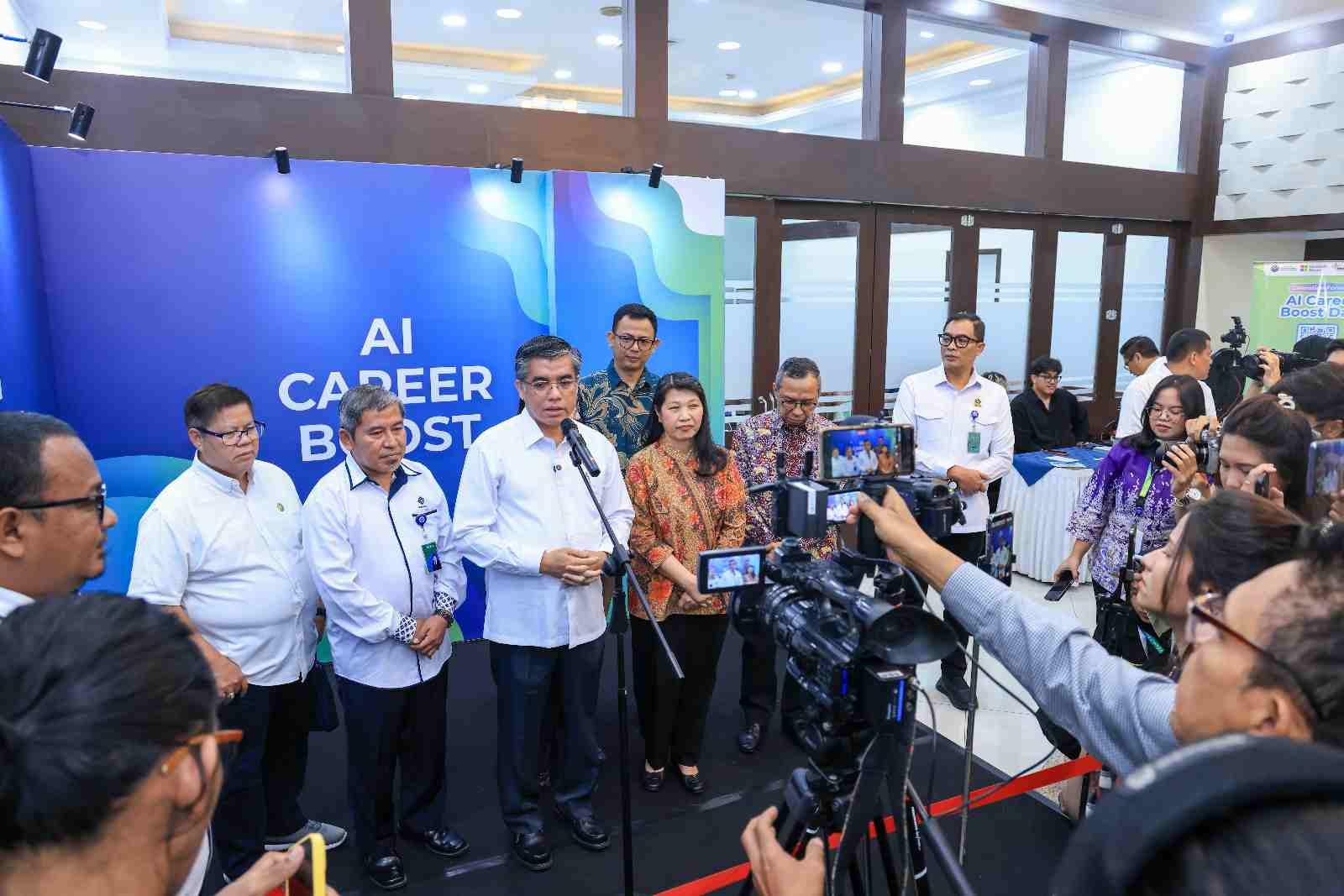
The Ministry of Labor partners with GreatNusa and Microsoft to prepare AI talent for the changing labor market
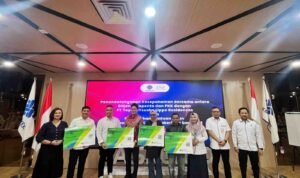
The Ministry of Labor (Kemnaker) is partnering with GreatNusa, an initiative of Bina Nusantara University (BINUS University), and Microsoft Indonesia to strengthen the artificial intelligence (AI) and software skills competencies of Indonesian digital talent.
This collaboration is part of a broader effort to train personnel capable of meeting industry needs amidst rapid digital transformation.
LATEST NEWS: Minister of Labor: Labor Inspectorate must be risk-based and preventive
Minister of Labor Yassierli stated that mastery of digital competencies, particularly AI, is now a crucial factor in increasing the competitiveness of the workforce. Synergy between the government, education, and the technology sector is therefore essential to train personnel capable of meeting industry needs and competing globally.
“We cannot ignore the digital transformation. Therefore, we must ensure that the Indonesian workforce possesses the competencies the industry needs. Collaboration with the education and technology sectors is a crucial step in accelerating the development of digital talent ready to compete globally,” stated Yassierli at the opening of AI Career Boost Day 2026, themed “Collaboration between AI and Indonesian talent: improving competencies and expanding employment,” in Jakarta on Tuesday, July 28, 2026.
According to Yassierli, the development of AI should not be viewed as a threat to the labor market. On the contrary, this technology offers opportunities for the emergence of diverse new professions that require digital skills at a higher level of competence.
LATEST NEWS: Fostering the Spirit of One and Indelible Amidst the Storm Undermining Public Trust
He referred to the World Economic Forum’s Future of Jobs Report 2025 and stated that approximately 92 million jobs are expected to disappear due to disruption, while simultaneously around 170 million new, technology-based jobs will emerge by 2030.
This shift in labor market needs is also reflected in the increasing demand for employees with AI skills. According to LinkedIn data, the demand for talent with AI skills in Southeast Asia has increased 2.4 times.
Additionally, 69 percent of business leaders in Indonesia indicated that they were reluctant to hire candidates who do not possess AI skills. These data demonstrate that AI proficiency has now become a real necessity for the Indonesian workforce.
Yassierli, however, believes that the development of AI does not equate to more layoffs. He referred to the Anthropic study from 2026 and explained that layoffs are influenced by various factors, ranging from economic conditions and the competitive position of companies to the macroeconomic situation. “AI-based automation is only one factor, not the primary cause,” he said.
LATEST NEWS: National Vocational Training: Efforts by the Ministry of Labor to Train Work-Ready Workers
Therefore, the Ministry of Labor continues to optimize vocational training centers (BLK) in various regions as centers for competence development that align with the needs of the business community. Training is offered from basic to advanced levels, including smart business management, through both in-person and online education to reach a broader audience.
Furthermore, the Ministry of Labor is also developing online job fairs to accelerate the matching of job seekers with the needs of the business community.
Yassierli added that the use of AI can indeed create job growth, provided it is supported by a strong talent development ecosystem.
He cited the example of the city of Hyderabad in India, which achieved an 11 percent growth in personnel recruitment thanks to the successful construction of an integrated digital talent ecosystem between the government, education, and the business community.
LATEST NEWS: National Vocational Training: Efforts by the Ministry of Labor to Train Work-Ready Workers
“If we can build a good digital talent development ecosystem, we can achieve the same results. What is needed is collaboration, the courage to adapt, and people’s willingness to master new technologies,” he said.
Yassierli emphasized: “We want training, certification, and access to jobs to form one interconnected ecosystem. That way, people not only acquire skills but also have a faster path to the labor market.”
He further stressed that technological progress must go hand in hand with strengthening human qualities. According to him, empathy, critical thinking, accurate decision-making, and the ability to collaborate are competencies that cannot be replaced by technology. ***rel