

Editor’s note
- Stay up late, be prepared for sudden cardiac arrest
- The dangers of staying up late for the heart
- Heart rhythm disorders and an abnormal heartbeat
- Blood thickening and a heart attack
Stay up late, be prepared for sudden cardiac arrest
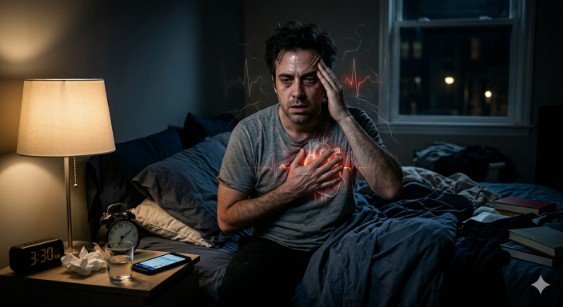
If you are still staying up late, be prepared for sudden cardiac arrest.
Some say that one o’clock at night is the quietest time to think. But at that time, your heart protests against its right to rest.
Dr. Ertha, cardiologist and vascular specialist at the Era Clinic, explains why staying up late is actually a very risky gamble.
The dangers of staying up late for the heart
The human heart has a rhythm that is regulated by nature. This is called the circadian rhythm. Imagine the heart of an employee who works from morning till evening. Suddenly, he is asked to work overtime until the morning, without coffee or extra bonuses.
His heart rate becomes irregular and his blood pressure fluctuates due to an increase in stress hormones. If you stay up late, your body produces large amounts of the hormone cortisol.
Normally, this hormone would only be released if you were being chased by a lion. The problem is that you are not being chased by a lion; you are simply engrossed in a movie or a game.
But your heart feels it is in great danger. High blood pressure at night due to sleep deprivation slowly but surely damages the walls of the blood vessels in your heart over time.
Heart rhythm disorders and an irregular heartbeat
Sleep deprivation also disrupts the heart’s electrical system, which can cause heart rhythm disorders, or an irregular heartbeat. Have you ever felt your heart suddenly pounding or having an irregular rhythm?
You were just sitting quietly in front of your laptop at 2 a.m. That is not because a ghost passed by, but is a signal that your heart is starting to short-circuit due to sleep deprivation. Even worse, staying up late often makes our blood thicker and more prone to clotting. If these blood clots reach the narrowed blood vessels of the heart, they can cause a heart attack immediately.
Blood thickening and heart attack
That is why many healthy people suddenly faint in the morning after a sleepless night. Because the ‘engine’ is already broken before the day even begins.
Time is irrelevant, but remember: no career is worth the cost of a heart stent. The body needs at least 7 hours to repair cells damaged by daily activities.
If you keep shortening that time, you shouldn’t complain when your body unexpectedly shuts down one day. Start now, try it. Set priorities.
If it can be done tomorrow morning, go to bed now. Your heart has been there all this time, from your birth until now. So give it a moment to breathe every evening.
Health starts with a soft pillow and lights that go out on time. Set priorities. If it can be done tomorrow morning, go to bed now. Your heart has been with you all this time, from before your birth until this moment. ***tok