
Editor’s note
- President Prabowo has paid off 640 trillion rupiah in debt from the 1998 crisis
- From the 1998 crisis to the settlement
- Use of the Bank Indonesia surplus
- The long chapter of financial sector reform
- Must still be distinguished from BLBI claims
- Government coordination
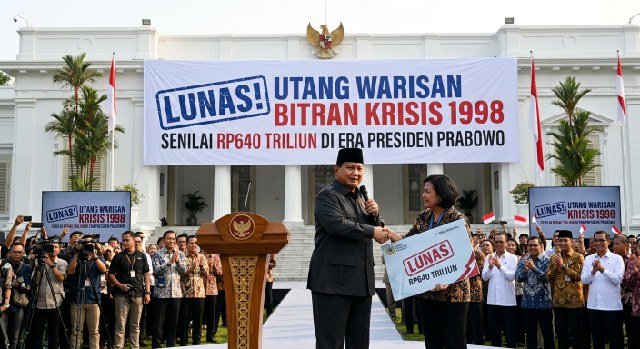
President Prabowo has paid off 640 trillion rupiah in debt from the 1998 crisis
After nearly three decades, the Indonesian government has finally paid off the debts incurred in connection with the 1997–1998 financial crisis.
The government stated that the remaining debts related to Bank Indonesia Liquidity Support (BLBI) would be paid off by August 2026. These debts were part of various bonds issued by the government when it faced the major economic crisis of the late 1990s.
LATEST NEWS: Murni Teguh University Explores Collaboration with the Honorary Consulate of Thailand in Medan
From the 1998 crisis to repayment
When the financial crisis struck Indonesia in 1997–1998, the government issued various types of bonds to mitigate the crisis’s impact and maintain the stability of the financial system.
According to Finance Minister Suahasil Nazara, the total value of the bonds issued by the government to address the crisis at the time was approximately 640 trillion Indonesian rupiah.
However, these obligations were not repaid all at once. Repayments were made in installments, depending on the type of instrument and the nature of the obligation.
A key component is the bank recapitalization bond, which was paid off in July 2020. The BLBI (Bank Indonesia Liquidity Support) obligations will not be fully settled until August 2026.
Therefore, the phrase “640 trillion rupiah debt paid off” should be understood as referring to a series of obligations arising from the issuance of bonds to address the 1997–1998 crisis, rather than a single bill of 640 trillion rupiah that will only be fully paid off in 2026.
LATEST NEWS: Internships Require SIAPKerja Account Activation
Use of the Bank Indonesia surplus
The final settlement was partially supported by a Bank Indonesia surplus of approximately 55 trillion rupiah, based on the audited financial statements for 2025.
This surplus was transferred to the state treasury and, in accordance with applicable regulations, can be used to meet obligations related to government bonds issued to address the 1997–1998 crisis.
This mechanism is part of the financial management relationship between the government and Bank Indonesia. Qualifying surpluses from Bank Indonesia are transferred to the state and can be used for specific obligations as stipulated by law and regulation.
A long chapter in financial sector reform
The settlement of these obligations is not merely a matter of debt repayment. This event is also part of the long journey of reforming Indonesia’s financial sector following the 1997–1998 crisis.
The response to the crisis at the time marked a crucial milestone in the process of improving the national financial system. After going through various phases of reform, consolidation, and the settlement of financial obligations, the government finally closed one of the long chapters left behind by the crisis.
LATEST NEWS: Deputy Minister of Manpower visits shoe factory in Serang; PT Nikomas Gemilang employs 53,000 workers
Suahasil Nazara described the settlement of these obligations as part of the history of the Indonesian financial sector. According to him, the handling of the 1997–1998 crisis enabled Indonesia to continue financial sector reform and economic development to this day.
Distinguishing between BLBI claims and other matters
There is an important point to understand. The settlement of the government’s obligations to Bank Indonesia does not automatically resolve the entire BLBI issue.
The government reserves the right to collect claims from parties with BLBI-related obligations. This means there is a distinction between the government’s debt to BI—which has been settled—and the claims or obligations owed to the state by other parties, the collection process for which is still ongoing.
Therefore, the repayment of the BLBI debt instruments in August 2026 constitutes a settlement of the government’s obligations under these financial arrangements, rather than a conclusion of all matters or collection processes related to BLBI.
Government coordination
Settling such long-term obligations necessarily requires coordination among government agencies and multi-year fiscal management.
The narrative of the Prabowo Subianto administration describes the settlement of these obligations as part of state financial management and the government’s coordination with Bank Indonesia.
LATEST NEWS: Press Freedom Protection Law
Tedy Indrawijaya is also mentioned in this context as Cabinet Secretary and part of the government’s coordination circle, which oversees the President’s various agendas.
However, based on available sources regarding the debt repayment, verified information focuses primarily on the Finance Minister’s explanation of the repayment mechanism and the use of Bank Indonesia’s surplus. Therefore, Tedy Indrawijaya’s specific role in the debt repayment process should not be treated as an established technical fact without supporting official sources.
Conclusion
After nearly 30 years, the sovereign debt linked to the 1997–1998 crisis has finally reached the settlement phase.
The total value of the bonds issued during the crisis amounted to approximately 640 trillion Indonesian rupiah, and the settlement is taking place in stages. The bank recapitalization bonds were redeemed in 2020, while the BLBI-related debt obligations were settled in August 2026.
This repayment marks a significant milestone in the long financial journey Indonesia has undertaken since the 1997–1998 crisis and demonstrates that the settlement of state obligations can span a very long period through various fiscal and institutional mechanisms. ***tok
Catatan Redaksi
- Utang Warisan Krisis 1998 Senilai Rp640 Triliun Dilunasi Presiden Prabowo
- Dari Krisis 1998 hingga Pelunasan
- Memanfaatkan Surplus Bank Indonesia
- Babak Panjang Reformasi Sektor Keuangan
- Tetap Perlu Dibedakan dengan Piutang BLBI
- Koordinasi Pemerintahan
Utang Warisan Krisis 1998 Senilai Rp640 Triliun Dilunasi Presiden Prabowo
Setelah hampir tiga dekade, pemerintah Indonesia akhirnya menuntaskan kewajiban surat utang yang diterbitkan dalam rangka penanganan krisis keuangan 1997–1998.
Pemerintah menyatakan sisa kewajiban surat utang yang berkaitan dengan Bantuan Likuiditas Bank Indonesia (BLBI) telah diselesaikan pada Agustus 2026. Kewajiban tersebut merupakan bagian dari berbagai instrumen obligasi yang diterbitkan pemerintah ketika menghadapi krisis ekonomi besar pada akhir 1990-an.
Dari Krisis 1998 hingga Pelunasan
Ketika krisis keuangan menghantam Indonesia pada 1997–1998, pemerintah menerbitkan berbagai jenis obligasi untuk menangani dampak krisis dan menjaga stabilitas sistem keuangan.
Menurut Menteri Keuangan, Suahasil Nazara, total obligasi yang diterbitkan pemerintah dalam penanganan krisis tersebut mencapai sekitar Rp640 triliun pada saat itu.
Namun, kewajiban tersebut tidak dilunasi sekaligus. Pembayarannya berlangsung secara bertahap sesuai dengan jenis instrumen dan kewajibannya.
Salah satu bagian penting adalah obligasi rekapitalisasi perbankan yang telah diselesaikan pada Juli 2020. Sementara kewajiban surat utang yang berkaitan dengan BLBI baru dituntaskan pada Agustus 2026.
Dengan demikian, istilah “utang Rp640 triliun lunas” perlu dipahami sebagai rangkaian kewajiban yang berasal dari penerbitan obligasi untuk penanganan krisis 1997–1998, bukan sebagai satu tagihan tunggal senilai Rp640 triliun yang baru dibayar seluruhnya pada 2026.
Memanfaatkan Surplus Bank Indonesia
Pelunasan terakhir tersebut salah satunya didukung oleh surplus Bank Indonesia sebesar sekitar Rp55 triliun, berdasarkan hasil audit laporan keuangan 2025.
Surplus tersebut disetorkan ke kas negara dan, sesuai ketentuan yang berlaku, dapat digunakan untuk memenuhi kewajiban surat utang negara yang diterbitkan dalam rangka penanganan krisis 1997–1998.
Mekanisme tersebut menjadi bagian dari hubungan pengelolaan keuangan antara pemerintah dan Bank Indonesia. Surplus BI yang memenuhi ketentuan disetorkan kepada negara dan dapat digunakan untuk kewajiban tertentu sebagaimana diatur dalam peraturan perundang-undangan.
Babak Panjang Reformasi Sektor Keuangan
Pelunasan kewajiban ini bukan hanya persoalan pembayaran utang. Peristiwa tersebut juga menjadi bagian dari perjalanan panjang reformasi sektor keuangan Indonesia setelah krisis 1997–1998.
Penanganan krisis pada masa itu menjadi salah satu titik penting dalam proses pembenahan sistem keuangan nasional. Setelah melewati berbagai tahap reformasi, konsolidasi, dan penyelesaian kewajiban finansial, pemerintah akhirnya menutup salah satu bab panjang dari warisan krisis tersebut.
Suahasil Nazara menyebut penyelesaian kewajiban tersebut sebagai bagian dari sejarah perjalanan sektor keuangan Indonesia. Menurutnya, penanganan krisis 1997–1998 memungkinkan Indonesia melanjutkan reformasi sektor keuangan dan pembangunan ekonomi hingga saat ini.
Tetap Perlu Dibedakan dengan Piutang BLBI
Ada hal penting yang perlu dipahami. Lunasnya kewajiban pemerintah kepada Bank Indonesia tidak berarti seluruh persoalan BLBI otomatis selesai.
Pemerintah masih memiliki hak tagih terhadap pihak-pihak yang mempunyai kewajiban terkait BLBI. Artinya, terdapat perbedaan antara utang pemerintah kepada BI yang telah diselesaikan dan piutang atau kewajiban pihak lain kepada negara yang proses penagihannya masih dapat berjalan.
Karena itu, pelunasan surat utang BLBI pada Agustus 2026 merupakan penyelesaian kewajiban pemerintah dalam hubungan keuangan tersebut, bukan penutupan seluruh perkara atau proses penagihan yang berkaitan dengan BLBI.
Koordinasi Pemerintahan
Penyelesaian kewajiban jangka panjang seperti ini tentu melibatkan koordinasi antarlembaga pemerintah dan pengelolaan fiskal yang berlangsung selama bertahun-tahun.
Dalam narasi pemerintahan Presiden Prabowo Subianto, penyelesaian kewajiban tersebut menjadi salah satu bagian dari pengelolaan keuangan negara dan koordinasi pemerintah dengan Bank Indonesia.
Nama Tedy Indrawijaya, selaku Sekretaris Kabinet, juga disebut dalam materi ini sebagai bagian dari lingkar koordinasi pemerintahan dan pengawalan berbagai agenda Presiden.
Namun, berdasarkan sumber yang tersedia mengenai pelunasan surat utang tersebut, informasi yang terverifikasi secara langsung berfokus pada penjelasan Menteri Keuangan mengenai mekanisme pelunasan dan penggunaan surplus Bank Indonesia. Karena itu, peran spesifik Tedy Indrawijaya dalam proses pelunasan utang tersebut sebaiknya tidak diklaim sebagai fakta teknis tanpa sumber resmi yang mendukung.
Penutup
Setelah perjalanan hampir 30 tahun, kewajiban surat utang pemerintah yang berkaitan dengan penanganan krisis 1997–1998 akhirnya mencapai tahap penyelesaian.
Total obligasi yang diterbitkan pada masa krisis mencapai sekitar Rp640 triliun, dengan penyelesaian dilakukan secara bertahap. Obligasi rekapitalisasi perbankan telah lunas pada 2020, sedangkan kewajiban surat utang terkait BLBI dituntaskan pada Agustus 2026.
Pelunasan ini menjadi penanda penting dalam perjalanan panjang keuangan negara Indonesia setelah krisis 1997–1998 sekaligus menunjukkan bahwa penyelesaian kewajiban negara dapat berlangsung dalam jangka waktu yang sangat panjang melalui berbagai mekanisme fiskal dan kelembagaan. ***tok