
Editor’s Note
- Pi Network: Digital Treasure
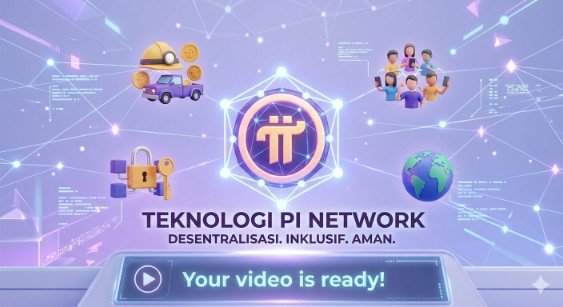
- Pi Network Technology
- Pi Network’s Ambitious Plans for 2026
- Benefits of Smart Contracts
- The Threat of a “Coin Tsunami”
- The Legality of Crypto in Indonesia
- Pi Network’s Future Scenario
Pi Network: Digital Treasure
Pi Network is a crypto project developed by Stanford PhD students Dr. Nicholas Kokalis and Dr. Cheng Diovan.
The project aims to build a Web3 platform that focuses on users, not computing power.
Pi Network utilizes the efficient Stellar Consensus Protocol, enabling mobile mining without high energy consumption.
The network is secured by a “security circle” based on trust between users. However, Pi Network faces significant challenges regarding the large supply of coins (100 billion), which could potentially drive down the price.
Furthermore, its legal status in Indonesia remains unclear, as it must undergo approval by the OJK (Financial Services Authority). Despite significant potential with plans to implement smart contracts and develop a DApps ecosystem, risks regarding the coin supply and regulatory uncertainty place Pi Network in the “yellow light” category.
Pi Network Technology
The founders of Pi Network aim to build a Web3 platform based on user identity and social trust, not computing power. They want to give the power of the internet back to the users.
Pi Network uses the Stellar Consensus Protocol, which is much more efficient than Bitcoin’s Proof of Work. Mining can be done using a mobile phone without high power consumption. Transactions are very fast and take only 3-5 seconds.
Pi Network Ambitious Plans for 2026
The Pi Network is secured by a “security circle” based on trust between users. This helps verify that users are real people and not bots.
Pi Network plans to grow into a massive digital ecosystem. Protocol upgrades (20, 21, 22, 23) are planned to enable smart contracts.
Benefits of smart contracts
Smart contracts enable the development of decentralized applications (DApps), games, NFT marketplaces, and more on the Pi network. This is expected to add real value to the Pi coin.
The total supply of Pi amounts to 100 billion coins, a significant number. The basic law of economics states that a large supply can drive down the price.
80% of the Pi coins are allocated to the community, but 20% (20 billion coins) are held by the core team. This raises questions about the degree of decentralization of the project.
The threat of a “coin tsunami”
Most Pi coins are still locked and will be released onto the market gradually.
A sudden release of a large number of coins could cause the price to plummet if demand is weak. Legality of Crypto in Indonesia
As of January 2025, the supervision of crypto in Indonesia has shifted from Bappebti (Commodity Futures Trading Regulatory Agency) to the Financial Services Authority (OJK). To legally trade Pi Network on local exchanges, it must pass the OJK selection procedure and be placed on the whitelist of approved cryptocurrencies. Currently, the legality of Pi Network is uncertain.
Future Scenarios for Pi Network
Pi Network is not a scam; it possesses a solid team and technology. However, this is not a green light, as the risk of a “coin tsunami” is very real given the supply of 100 billion dollars. Caution and monitoring of developments are required.
Optimistic scenario: Smart contracts are operational, numerous applications are launched, OJK approval is obtained, listing on major exchanges is achieved, and the price could reach $0.50-$1. Pessimistic scenario: The ecosystem does not develop, the large supply drives down the price, no regulatory approval is obtained, and the price could drop below $0.***tok