Editor’s Note
- North Sumatra’s regional tax revenues will increase significantly in 2025
- Revenue in 2025: 5.6 trillion rupiah
- This is the North Sumatra Regional Tax Authority’s strategy to raise taxpayer awareness
North Sumatra’s regional tax revenues will increase significantly in 2025
North Sumatra’s regional tax revenues showed a significant increase in 2025 compared to the previous year. The North Sumatra provincial government (Pemprov), through the Regional Tax Authority (Bapenda), will continue to work to improve taxpayer compliance and maximize regional revenues.
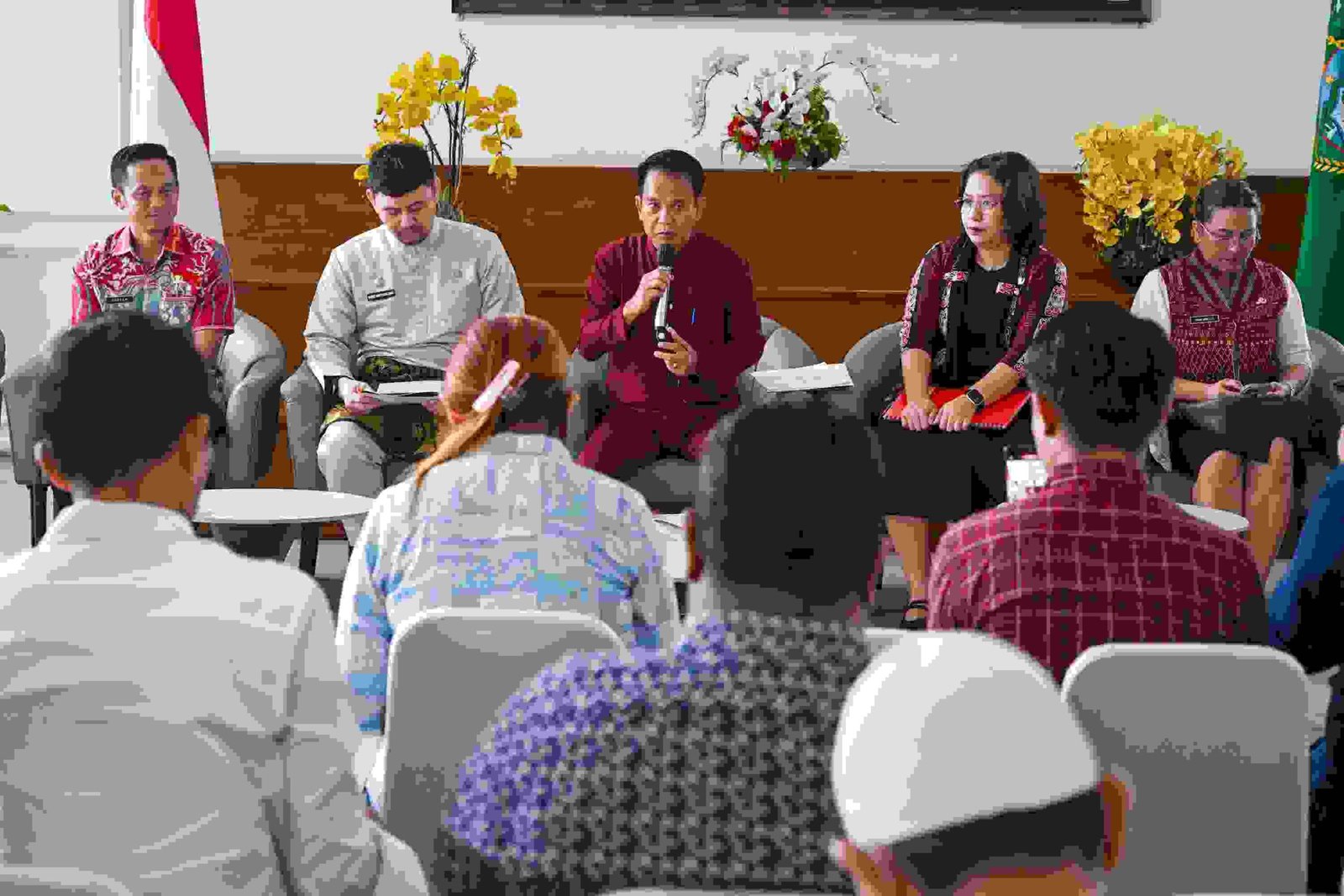
The head of the North Sumatra Regional Tax Administration (Bapenda), Ardan Noor, stated that regional tax revenues have increased through December 31, 2025, despite various challenges, including the disasters that have hit several areas in North Sumatra. “Regional tax revenues as of December 31, 2025, have increased compared to the previous year, despite the severe challenges we endured at the time of the disaster in North Sumatra. Thank God, thanks to everyone’s help and encouragement, revenues have reached 90.31%,” Ardan said during a press conference held by the North Sumatra Communications and Information Office in the Dekranasda lobby of the North Sumatra Governor’s Office, Jalan Diponegoro, Medan, on Thursday, March 5, 2026.
Revenue in 2025: 5.6 trillion rupiah
Regional tax revenues in 2025 include: Motor Vehicle Tax (PKB) of 1.4 trillion rupiah, Motor Vehicle Transfer Tax (BBNKB) of 799 billion rupiah, Fuel Excise Tax (PBBKB) of 1.4 trillion rupiah, and Surface Water Tax of 139 billion rupiah. and a cigarette tax of 1.2 trillion rupiah, a tax on heavy machinery of 25 million rupiah, and a tax on non-metallic minerals and rocks (MBLB) of 4.5 billion rupiah.
“The total tax revenue in 2025 will be 5.6 trillion rupiah, or 90.31%. This is a significant increase compared to 2024, when the revenue was 85.5%,” Ardan said.
He acknowledged that maximizing regional revenue in 2025 was not easy, particularly due to the flooding at the end of the year. Several regions, such as Central Tapanuli and South Tapanuli, were severely affected, resulting in tax payments being temporarily suspended due to limited facilities and infrastructure.
“For tax payments, we urgently need electricity and internet. Without these facilities and infrastructure, the payment process is very difficult, especially because the area itself is impassable,” Ardan explained.
This is the North Sumatra Regional Tax Authority’s strategy to raise taxpayer awareness
To increase regional revenues in the future, the North Sumatra Regional Tax Authority will prioritize strategies to increase taxpayer compliance and awareness. One of the steps being taken is the North Sumatra Tax Festival in 2026. Through this program, taxpayers who pay their motor vehicle taxes on time will have the opportunity to participate in a lottery as a token of appreciation for their compliance.
“The goal of this tax festival is to increase taxpayers’ enthusiasm for timely payment. We aim to encourage voluntary compliance with tax regulations, not coercion, so that we can generate stable regional revenue. Therefore, we will first improve taxpayer compliance with tax regulations,” Ardan said.
In addition, the North Sumatra Regional Tax Administration (Bapenda) will also offer incentives such as fine waivers to encourage taxpayers to pay on time. System integration with banks will be further strengthened, enabling citizens to pay their taxes everywhere. A strategy to reach local communities is also being implemented through direct coordination with district and municipal governments.
On this occasion, Ardan urged district and municipal governments to use the optional funds to support tax optimization. These optional funds are additional levies on the motor vehicle tax (PKB) and the motor vehicle tax (BBNKB), in accordance with Law No. 1 of 2022, which will be transferred directly to district and municipal treasuries to strengthen regional financial independence.
We urge districts and municipalities to budget the funds they receive from the optional funds to support tax optimization activities. To date, districts and municipalities have not fully utilized the optional funds they receive for tax optimization. ***obs