North Sumatra poised to become Indonesia’s fashion hub thanks to traditional textiles
North Sumatra Governor Muhammad Bobby Afif Nasution emphasized the province’s readiness to become one of Indonesia’s fashion hubs through the development of traditional textile products.
According to him, North Sumatra’s rich cultural heritage is a key asset for the regional economy and for strengthening the national fashion industry on the international stage.
LATEST NEWS: The secret behind the Galaxy Z Fold8 Ultra’s thinner design: Flex Titanium is the key to its evolution
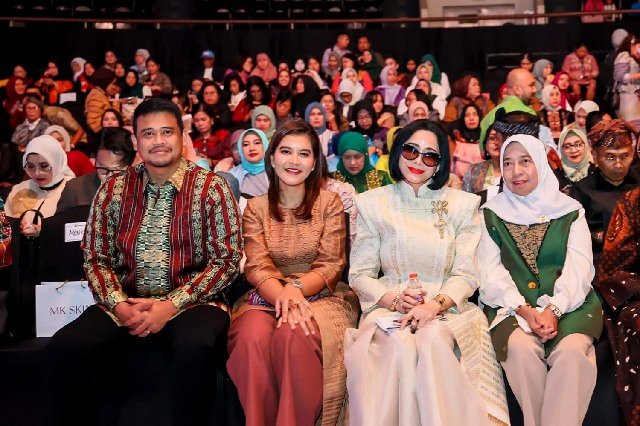
Bobby made these remarks during the closing ceremony of Indonesia Fashion Week (IFW) 2026 in Jakarta, which was themed “Ulos Simetria” (The World of North Sumatra). The event was considered a success in showcasing North Sumatra’s cultural heritage to both national and international audiences.
“We are ready to become Indonesia’s fashion hub because we believe that the cultural heritage bequeathed to us—particularly from North Sumatra—can boost the economy, especially for the people of North Sumatra, as well as the national economy, particularly within the fashion sector,” Bobby stated.
Bobby is confident that combining traditional ulos motifs with the modern touch of fashion designers will hold great appeal on the global fashion stage.
He views IFW 2026 as a starting point for expanding collaboration between North Sumatra and the international fashion industry.
He also expressed his appreciation for Indonesia Fashion Week and all parties involved in introducing and promoting Indonesian crafts and textiles, particularly those from North Sumatra. He affirmed that the North Sumatra provincial government is committed to continuing its support for cultural promotion through the textile sector.
“That is why we hope this evening opens the door for us—North Sumatra—to collaborate further with the rest of the world and the international community. We are also ready to work together on showcasing our culture, particularly within North Sumatra’s textile sector,” he said.
In addition to textiles, Bobby highlighted North Sumatra’s rich culinary heritage, which is widely renowned among Indonesians.
“When it comes to the culinary delights of North Sumatra—and Medan in particular—people say there are only two flavors: the food is simply good, or it is very good,” Bobby remarked.
LATEST NEWS: Ministry of Manpower assesses impact of start-up capital support
Meanwhile, Tourism Minister Widiyanti Putri Wardhana expressed her admiration for the strong tradition of ulos weaving during her visit to the Lake Toba region.
To her, ulos is not merely a traditional fabric but an integral part of Batak life that has been preserved for generations.
“What moves me most is how ulos remains a living part of the people’s daily lives. Behind every piece of ulos lie the skilled hands of Batak women who carefully uphold the tradition,” she said.
She is convinced that preserving local traditions is a key asset in developing a tourism destination.
LATEST NEWS: Data integration across agencies improves the quality of employment services
“Traditions are continuously passed down and honored, serving as a source of pride across generations. To me, that is what gives a destination a unique character that is hard to replicate. In tourism, this character forms the foundation of a destination’s branding,” she added.
Widiyanti hopes that Indonesia Fashion Week will continue to be an event that inspires the world and attracts tourists to Indonesia.
“Few countries possess as rich a textile heritage as Indonesia. What makes it even more special is that we have designers capable of translating this cultural heritage into works that continue to evolve and garner acclaim on the international stage,” she said.
Poppy Dharsono, Chairperson of the Association of Indonesian Fashion Designers and Entrepreneurs (APPMI) and President of Indonesia Fashion Week, stated that the theme “Ulos Simetria” implies that progress must go hand in hand with the preservation of cultural values.
Tradition and innovation, she explained, are two complementary forces in shaping the future of the Indonesian fashion industry.
“For five days, we have witnessed the immense creativity of the nation’s talent, a fusion of ideas and innovations, and collaborations that strengthen Indonesia’s position as a fashion powerhouse—both regionally and globally,” Poppy said. ***REL