Editor’s Note
- Regional Authorities are reminded to pursue rational, research-based targets for regional original revenue (PAD)
- Management of Levies and Taxes
- Optimization of levies on assets of the Provincial Government of North Sumatra
- Levy target for 2026 increases by 8.53%
Regional Authorities are reminded to pursue rational, research-based targets for regional original revenue (PAD)
The Vice Governor of North Sumatra (Sumut), H. Surya, has reminded all regional authorities (OPDs) to establish rational and research-based targets for regional original revenue (PAD).
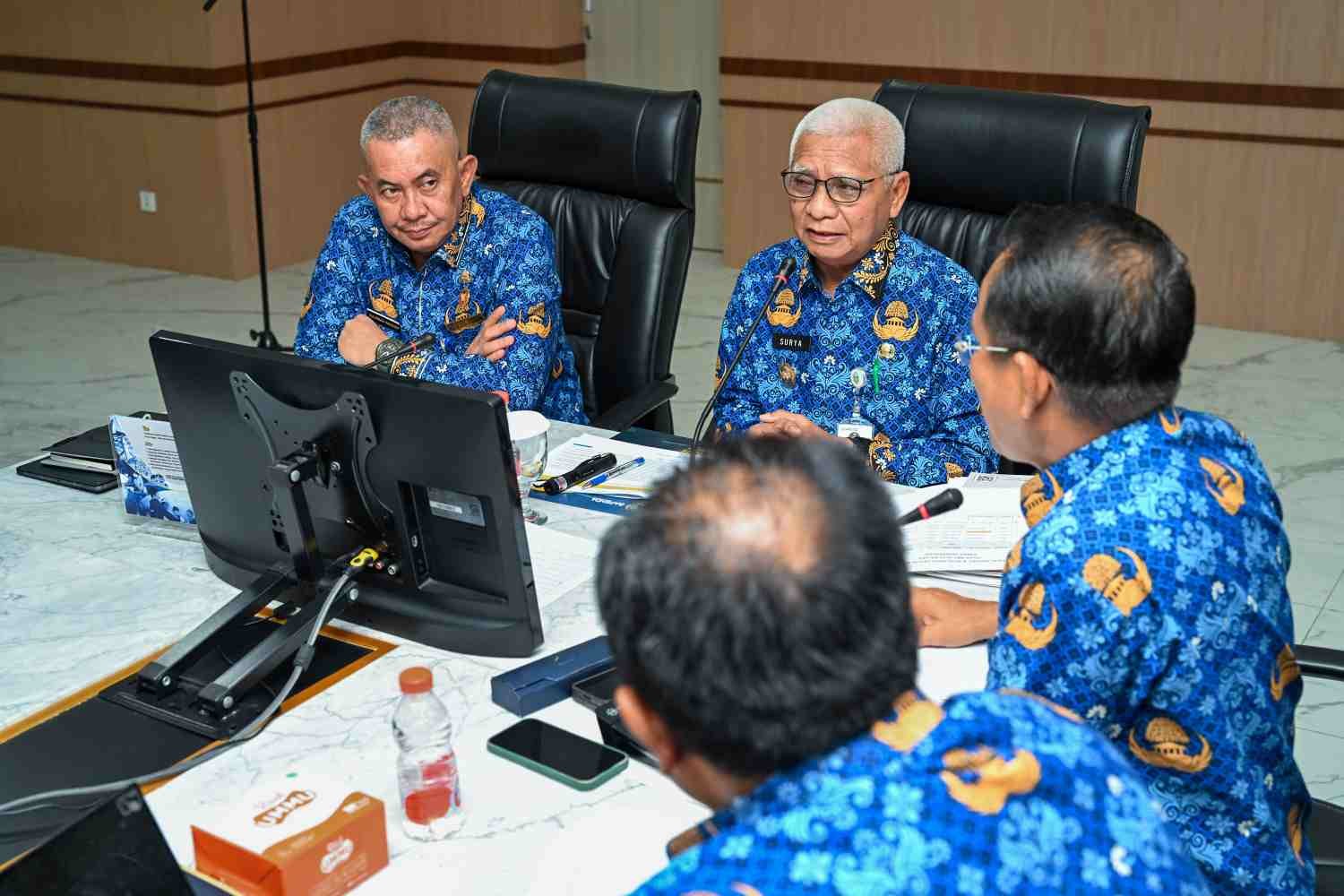
He made this statement during a meeting on amendments to Regional Regulation (Perda) No. 1 of 2024 concerning the addition and modification of regional taxable objects. The meeting took place on Monday, January 19, 2026, at the Office of the Governor of North Sumatra on Jalan Diponegoro in Medan.
Management of Fees and Taxes
Vice Governor Surya emphasized that the management of fees and taxes reflects the performance of regional administrators in providing the best possible service to the population.
He urged each regional government organization (OPD) to set its regional original revenue (PAD) targets based on thorough research, not just figures on paper.
“We must set targets based on research, not just ‘for fun.’ I want realistic targets. Not unrealistic, unattainable goals,” Surya emphasized.
Optimizing the Asset-Based Taxes of the Provincial Government of North Sumatra
He cited the potential levy on school cafeterias as an example. According to his calculations, the potential revenue from 746 schools, if the lowest rate is 2,000 rupiah per day, could amount to hundreds of millions to billions of rupiah.
Optimizing the assets of the North Sumatra provincial government, such as venues and accommodations in tourist areas like Parapat, could also generate tens of billions of rupiah if managed properly.
“The results of this meeting must be followed up immediately. Regional bodies that have not yet submitted mandatory proposals should do so as soon as possible in accordance with the Ministry’s guidelines, so that we have a strong legal basis for collecting the levy,” Surya concluded.
Levy target for 2026 increases by 8.53%
North Sumatra’s Acting Regional Secretary, Sulaiman Harahap, explained that this meeting was a follow-up to the Ministry of the Interior (Kemendagri)’s review of the Law on Financial Relations between the Central Government and the Regional Authorities (HKPD).
“There’s really nothing new here; it’s more about refining the wording and adjusting the rates based on the Ministry of Home Affairs’ evaluation. Our focus is on adjusting the rates to achieve a reasonable regional original revenue (PAD) target. Rationality doesn’t mean lowering the target, but rather working hard to achieve it without harming the community,” said Sulaiman.
Meanwhile, Ardan Noor, head of the North Sumatra Regional Tax Agency (Bapenda), reported an 8.53% increase in the tax target for 2026, an increase of approximately IDR 50 billion compared to the previous year. The total tax target is expected to rise from IDR 185 billion to IDR 192 billion.
Bapenda noted that the realization of the PAD by the regional government agencies (OPDs) still varies. Several regional government agencies (OPDs), such as the Agency for Human Resource Development (BPSDM) and the Agency for Plantations, have achieved a realization rate of over 100%. However, there are still several regional government agencies whose realization rate is below 50%, namely the Ministry of Education, the Ministry of Transport, and the Ministry of Maritime Affairs and Fisheries.
He explained that the amendment to this regional regulation has reclassified several taxable objects to align them with central regulations. One example is port cleaning services (provided by the Ministry of Maritime Affairs and Fisheries), which are now considered a public service, not a business service. Land use for canteens is also now classified as a business service. ***rel